President’s Message
As the scorching hot summer winds down, slightly cooler weather is almost upon us. That means trout “season” is right around the corner! Hopefully, your fly boxes are loaded and ready to go.
Our Chapter has been very busy this summer, working on a multitude of projects to keep improving the river. I would like to extend my heartfelt thanks to Mike Palatas, Lee Southern, Randy Kirchner, and Tom Allen for their tireless efforts this summer with stream cleanup, honeysuckle cutting, and overall trail development. Their hard work will make the experience on the Mad River all the more special. We also had successful monitoring events on June 15th and August 10th thanks to our team led by Tyler Wright. Be sure to check out the detailed article on our monitoring later in the newsletter.
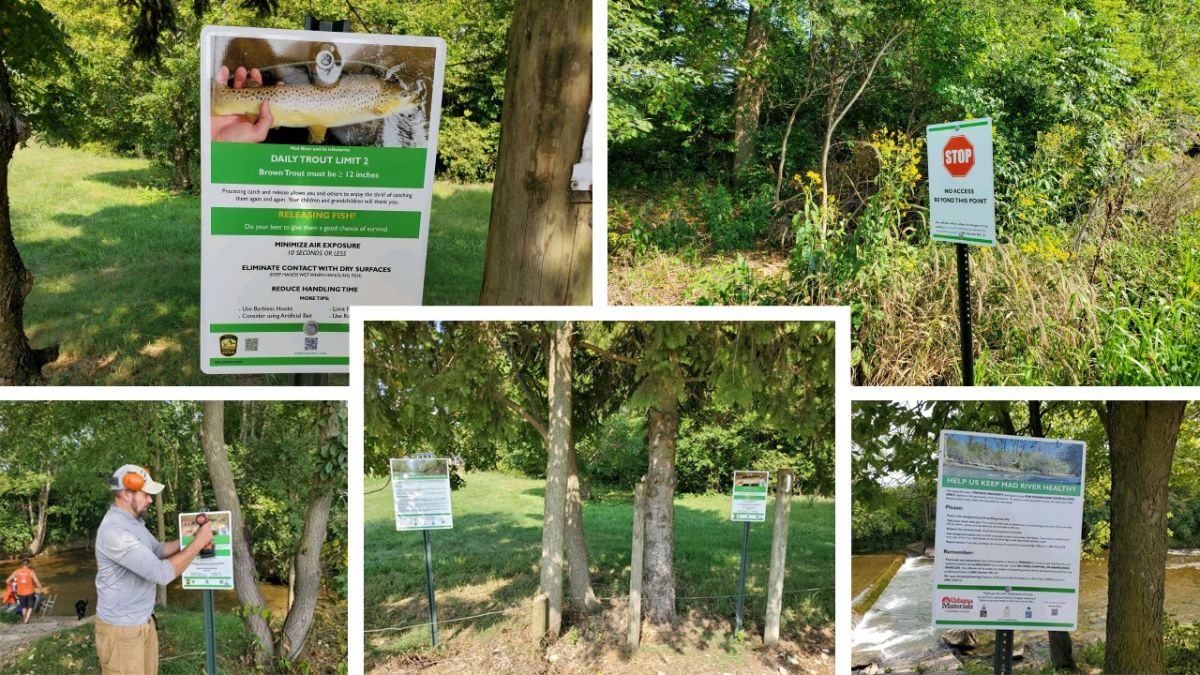
I would also like to express my gratitude to everyone involved in getting trout handling, littering, and property access signs installed at key locations along the Mad River. Tom Allen worked closely with landowners to secure their agreement, Pam Allen designed the signs and collaborated with ODNR to finalize the signs, and Tom Allen and Mike Palatas took the time to install them.
As always, we encourage anyone to volunteer to help with any of our initiatives. Sampling and monitoring events are both educational and fun, and stream cleanup is extremely important for the river! On that note, we are still looking for volunteers for the upcoming Cleanup event. Please take the time to help make a difference keeping the place you love to fish clean! See details later in the newsletter. Thank you Paul Cicconetti for all your efforts to date!!
I’m also excited to announce that we are preparing to go live with a new and improved website! Also, keep an eye on your inboxes as you should be receiving a message about the 2024-2026 bi-annual plan in the near future.
Check out the Upcoming Events to mark on your calendars:
I hope that everyone has a wonderful fall; hopefully I look forward to seeing you at the cleanup and some of the upcoming events — maybe I will see you fishing on the river!
Thanks!
Steve Moore, President
Tightlines Everyone!
p.s. Articles Always Needed!! Pam could use your help with future newsletters. If you’ve been on a fishing trip, or have something else you’d like to share, like a fly recipe, we’d love to hear about it. Write an article and send pictures to her at pamallen@tumadriver.org; it’s that easy 🙂
and Held A Fishing Derby at Wolf Run State Park
Submitted by Mike Legats, TIC Classroom Coordinator
In an inspiring display of environmental stewardship and hands-on learning, the 4th graders from Shenandoah Elementary School recently celebrated the culmination of their months-long project by releasing the rainbow trout they raised into Wolf Run State Park. Guided by their dedicated teachers, Mrs. Michel and Mr. Legats, the students not only learned about the intricacies of raising trout but also the broader importance of environmental conservation.
The event was held on May 7th, when the excited students, accompanied by teachers and parents, gathered at Wolf Run State Park. This project, initiated at the beginning of the school year, involved the students in every step of the process, from monitoring the Little Buffalo Creek on the school campus, and preparing for the trout eggs to be delivered by the Trout Unlimited Mad River Chapter. Also, caring for the trout after they hatched and monitoring water quality and feeding routines. The hands-on experience provided a unique opportunity for the children to learn about aquatic ecosystems, life cycles, and the responsibilities that come with nurturing living organisms.
The highlight of the day was the fishing derby that followed the trout release. The park buzzed with excitement as the students cast their lines, eager to catch their first fish. The derby not only provided a fun and competitive environment but also reinforced the lessons they had learned about fish habitats and sustainable fishing practices.
The event at Wolf Run State Park was more than just a fun outing; it was a testament to the impact of experiential learning. By raising and releasing rainbow trout, the Shenandoah 4th graders have taken their first steps in becoming informed and responsible stewards of the environment. The project has not only enriched their education but also instilled in them a sense of responsibility and respect for the natural world.
As the students watched their trout swim away, there was a palpable sense of achievement and connection to nature. The lessons learned from Mrs. Michel and Mr. Legats will undoubtedly stay with them for years to come, fostering a lifelong appreciation for the environment and the importance of conservation efforts.
We would like to extend our heartfelt gratitude to the generous sponsors and volunteers of the Shenandoah Fighting Derby. This event would not have been possible without the support of Foxbite Baits, Bass Curtis, Deerassic Education Center, Smith Taxidermy, Ohio Bow and Arrow Outfitters, ODNR, Big Joshy Baits, The McAlarney Family, Josh Maynard, The Ohio Outdoor News, and John Bates. Their contributions have greatly enhanced the success of our derby and the experiences of all participants. Thank you for your unwavering support and dedication to our community.
June and August Monitoring Results
by Tyler Wright, Monitoring Director, TU Mad River Chapter
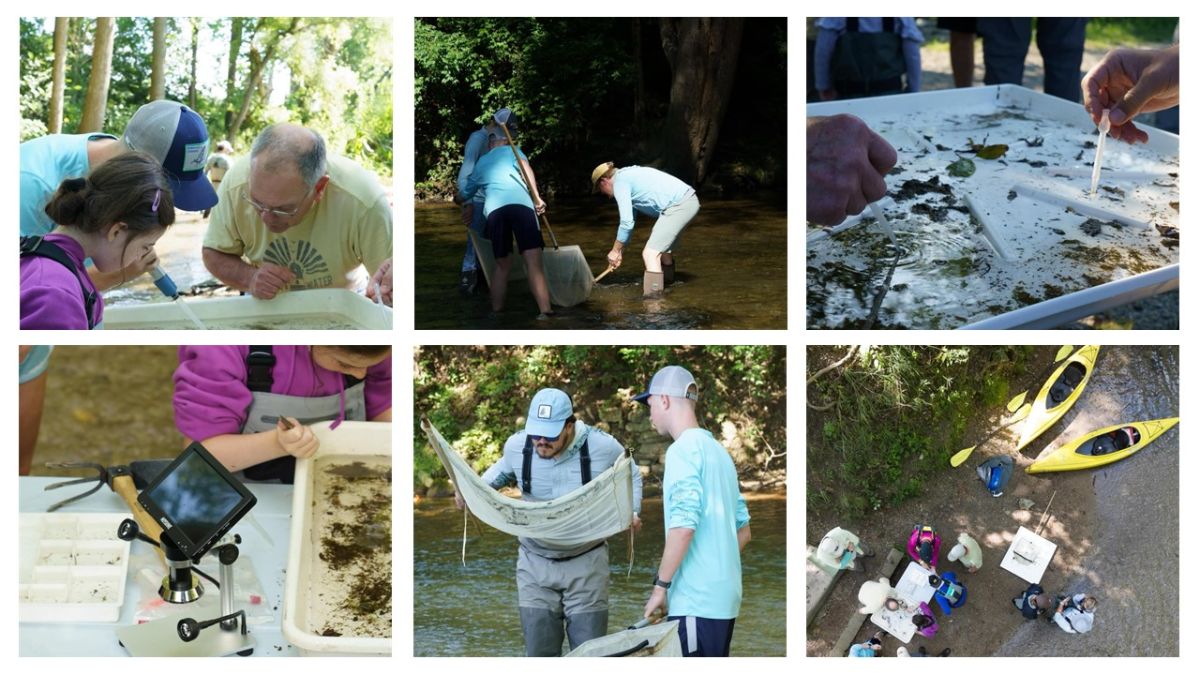
Special thanks to all those that came and participated in our stream sampling on August 10th. As a reminder, we are looking for individuals who are interested in joining the monitoring team for 2025. As part of the team you will be asked to attend most if not all of the monitoring dates, and assist in the data collection. If you have any questions please let me know!
The results of the sampling are in the table below. Two of the sites registered good water quality while the other sites came in at excellent quality. It seems the river is maintaining a diverse ecosystem of invertebrates even with the long hot days of summer. As a note on quantity, samplers noted a down tick in numbers of each invertebrate found.
US-36 . . . . . . . . . . . . . (25) Excellent
OH-29/Kings Creek. . . . (23) Excellent
Watson’s Property . . . . (23) Excellent
Mac-o-Chee . . . . . . . . . (20) Good
Pimtown Rd . . . . . . . . . (25) Excellent
West Liberty Park . . . . (22) Good
For those unfamiliar with our efforts, each year the Mad River Chapter conducts four monitoring events to provide a snapshot of the river’s water quality. These outings are important for understanding the health of the Mad River ecosystem.
During each event, our team samples for macroinvertebrates, the small organisms living in the river that trout eat. These macroinvertebrates are essential indicators of water quality because different species have varying levels of tolerance to pollution. By identifying which macroinvertebrates are present, we can estimate the river’s overall health.
The data collected from these monitoring activities help us track changes in water quality over time and guides our conservation efforts. We encourage chapter members and the community as a whole to join us in these educational outings to learn more about the Mad River.
Our findings from June event shown below. We only had three volunteers and were not able to monitor all sites.
US-36 ……………….. (32) Excellent
OH-29/Kings Creek … (26) Excellent
Watson Property …….. NA
Pimtown ………………… (20) Good
Mac-O-Chee ………….. NA
West Liberty …………… (26) Excellent
(The above numbers are values for a Pollution Tolerance Index rating. The higher the number, the higher the quality.)
Please join us for the final monitoring day this year on October 19th.
Our Community is Very Special
by Jeremy Reger, Board Member, TU Mad River Chapter
Getting started
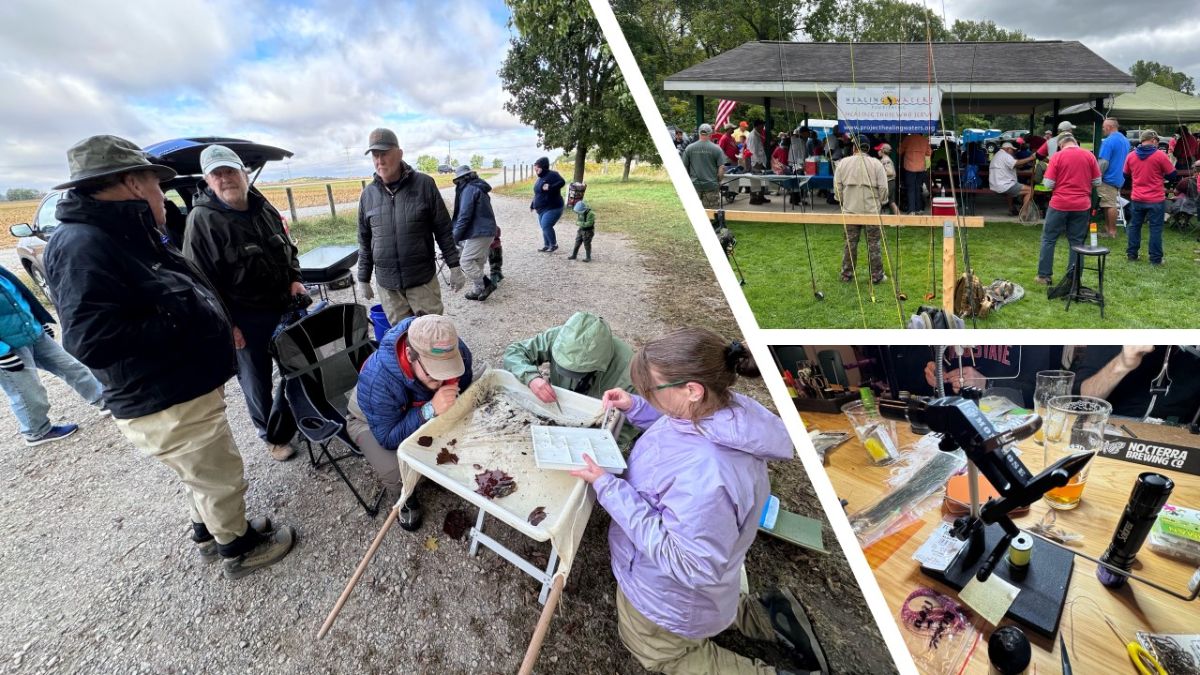
The last 16 months of my life have been a journey I didn’t realize I would be taking when I picked up a fly rod for the first time. From the moment I started learning about this sport, like at the ODNR-sponsored “Exploring Fly Fishing” course, I saw volunteer instructors invest their time and experience into the participants. I attended a Patriot Day event as a new participant in the Project Healing Waters Fly Fishing Columbus program and noticed many of the same volunteers were at this event. I also attended several different fly-tying nights for Ohio Women on the Fly and a fundraising night for The Mayfly Project – Columbus and events at Mad River Outfitters. At every event I noticed the same community members investing their time, money, and expertise. That is something extraordinary you don’t find in many avenues in life.
Seeing this diverse community of all sexes, ages, and political backgrounds coming together, united by a shared commitment of protecting our resources for generations to come, I couldn’t help but get involved. Each and every outing I attended, like water quality monitoring, a log jam clearing, and fly tying nights where guides stopped what they were doing to help me with the basics, I was more and more impressed by the community members. I was searching to see what drove them to be who they are and what motivated them to be at these events. Looking back, it’s clear now; though at the time, it wasn’t so obvious to a new fly fisher. The unifying element and the pillar of this community turns out to be the rivers and streams that have breathed life into each one of these people. The Mad River was this for me for close to a year. As I read more books, and fished with more people who told me stories, I got a drive within me to visit some of the country’s most legendary rivers and streams.
The Au Sable River
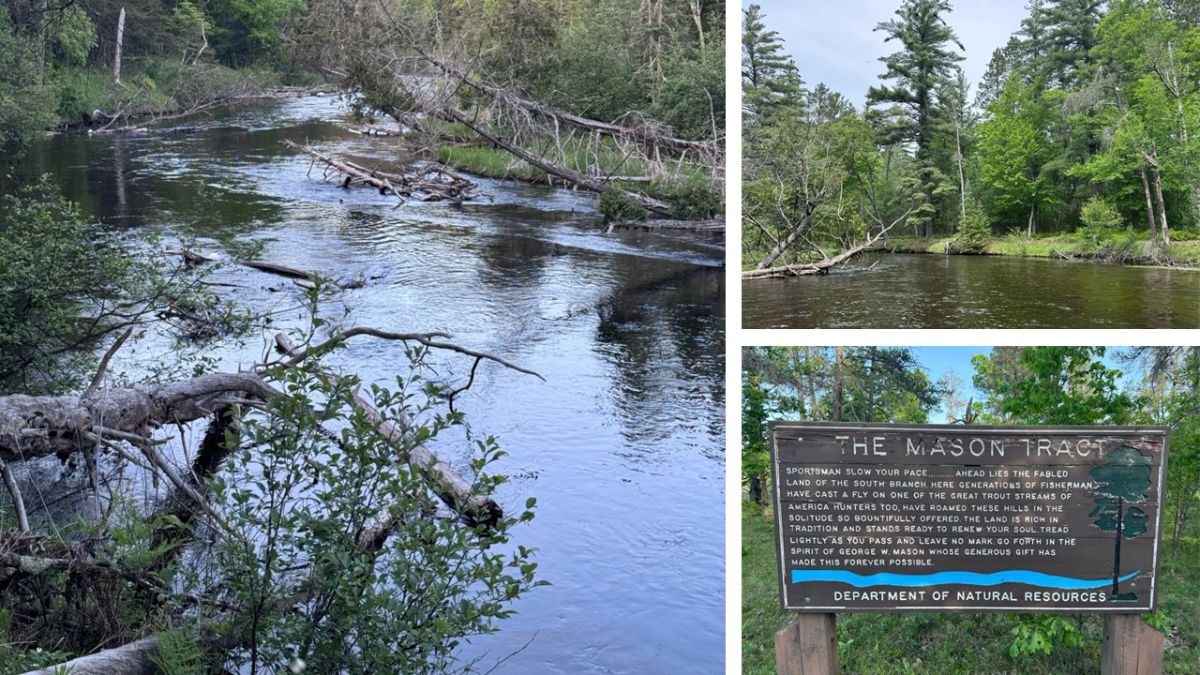
I started making plans to visit Northern Michigan for the year anniversary of catching my first fish on a fly rod which was May 31, 2023. To make a long story short, on May 31, 2024, I made my way up to Grayling Michigan at the Canoe Harbor Campground by myself on a Friday evening. Everything I had read was the Au Sable River is one of the toughest rivers in Michigan because of the pressure, but the allure of Trout Unlimited being formed on the banks of the river in 1959 was too much for me to pass up. I set up camp like a 10-year-old boy with a brand-new bike under the Christmas tree waiting for me. I could not wait to see those fish rising. I wasn’t over the hill to the river 2 minutes before I started seeing the fish rising for as far as you could see. A book does not do it justice, it was absolutely sensory overload. It was a very tough evening watching the fish float under my all-day dun dry fly for 10 yards while they inspected every detail of my dry fly.
The next morning, I stopped by the historic Gates Lodge to pick up some “sure thing” flies from the guy behind the counter. After spending 20 minutes helping me with my setup and suggesting some spots to try, he seemed genuinely intrigued by my solo journey in this area for the first time. He continued to engage me with local lore and fish stories. He encouraged me to come get to know the rest of the river while I could still get around. This man I had just spent the morning with was the owner of the lodge, Josh. He didn’t have to take all that time, but he recognized my interest in the river and less about the vacation and I realized right away he was just like those same volunteers who got me hooked. I stopped by another brand-new fly shop in Grayling called Drakes previously called Ron’s. Scott behind the counter treated me like I was his best friend, showed me a few flies I didn’t have, showed me how to tie them because he was a fly tier with Ron’s and he explained he had been involved with Project Healing Waters as well and invited me back up to fish with him on his days off. We even made steelhead plans for this upcoming season on Erie’s tributaries. I ended up back at the campground with my “sure things” and walked down to the river to stop and watch and met a man and his daughter coming down the hill. After some conversation I learned his daughter had just moved back from working in Yellowstone, and he had fished the Au Sable every year for 40 years. He offered to give me a ride back if I wanted to tag along and fish with them for the afternoon. He showed me a few techniques, and his daughter was so helpful. When we got to their car, they had snacks and refreshments and wouldn’t take no for an answer. I spent the next couple of days around the fire with them for breakfast and a very welcome pot of hot coffee and back for dinner hearing stories about the river and their adventures. This is more of the same from everyone I have met so far happy to pour into me on their own time, spending time away from their lives and their own fishing time to invest in me. This is not normal, this fly fishing community is very special.
I spent most of the time on the Mason Tract, a 9-mile stretch of the South Branch that was gifted to the state to preserve it for wildlife. It is an incredibly special place with a wonderful trail that makes its way down the banks of the river through old-growth pines, cedar marshes, and lots of mixed hardwoods. The fishing was incredibly technical. Every spot I waded was below waist-deep wading and the bottom was easy to wade with a sandy gravel bottom. As for the fishing I was completely out of my league, but I did have many many takes on dry flies and just could not get them to the net. It was a special place; I am going to try to go up once a month during the season.
The Manistee
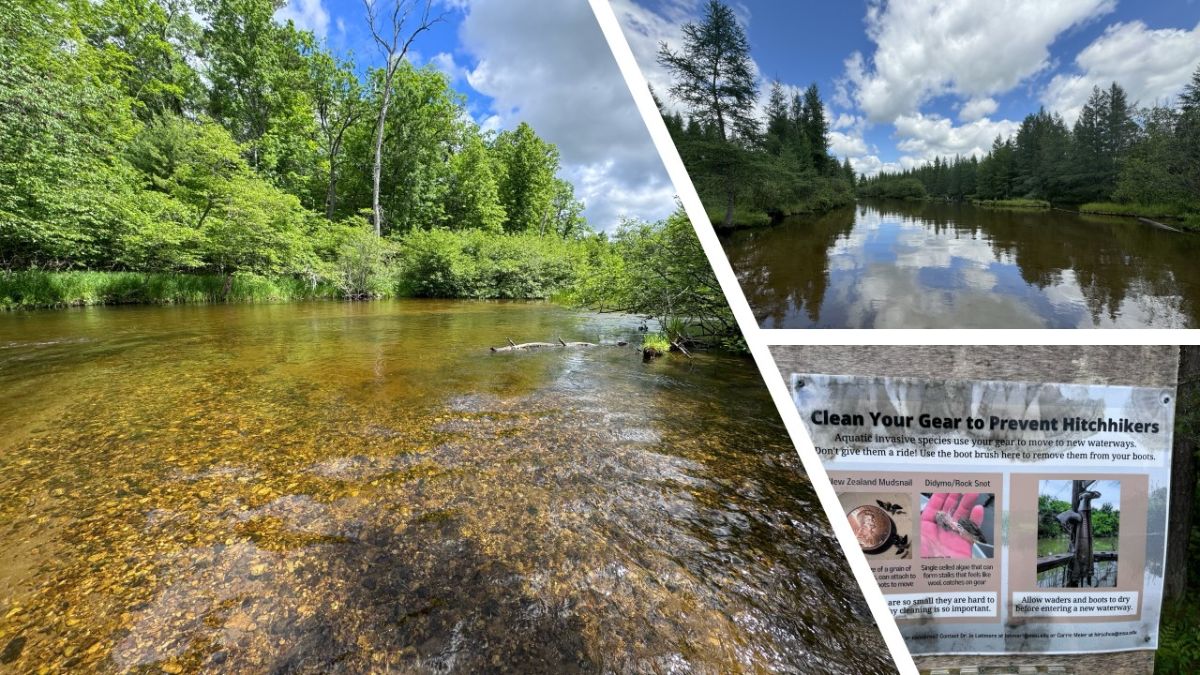
One of the tips I got from Josh at Gates Lodge was that the Manistee River headwaters are just east of the town of Grayling. One fascinating thing about the Au Sable and Manistee rivers is they are just over two and a half miles apart at one point, but they are in two different watersheds. The signage at every spot I stopped was very clear about stopping invasive species and even had boot cleaners installed at the parking lot. I picked a few spots to wade up one bank and down the other and it was very tough soft bottom wading. I chose a bridge-to-bridge spot that was 0.8 of a mile to wade. I dropped my bike off at one end and drove back to the other and gave myself four hours to wade it. The fishing was incredible, I caught my first-ever Brook Trout and several more. I saw ten or more twenty-inch browns sitting out in the middle of the river on what I would call a flat. This told me everything I needed to know that I was in a very different river with very little pressure from anglers and birds of prey. I allotted 4 hours for this wade and at 7 hours I had only gotten less than halfway, I headed back to my truck. The bottom of the river was just too soft, and I even lost a sole on my Korkers which they had waiting on me when I got back to Ohio. I will be back to fish the upper Manistee shortly, but I will be fishing from my canoe. I met two people as I was getting back to my truck. They were about to launch their canoes for a float trip. I asked for some local intel, and they let me know they were up there on vacation from Ohio, a few minutes from my house to be exact. What are the chances? They did give me a great tip — if I spend my time in the primitive campgrounds, I can drive over to the nicer campgrounds for showers. That’s a golden tip I will be taking advantage of.
The Pine
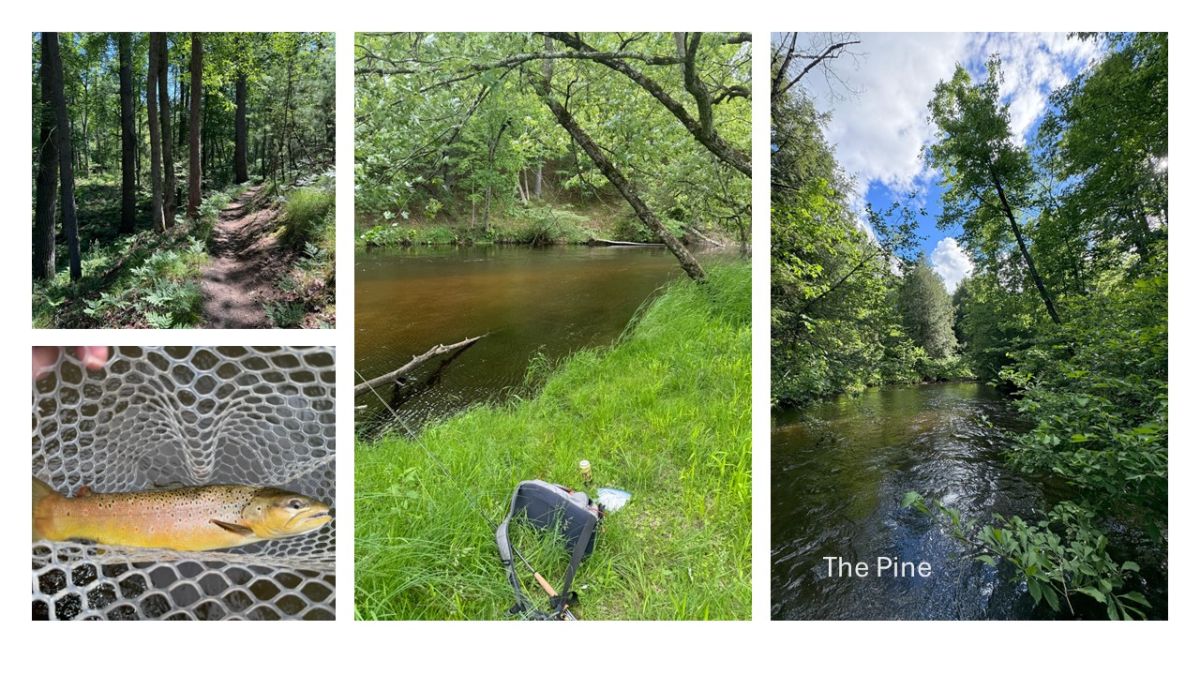
I didn’t spend much time fishing the Pine, but I could tell it would be a very special place. It is very tight as in 6-9ft wide in spots and has little public access. However, on my 3rd cast I moved my biggest fish in Michigan so far. I will be back here with a canoe and shorter rod. More on this in a bit.
The Pere Marquette
I didn’t know what to expect with the PM especially coming from the wilderness up by Grayling, down to Baldwin basically in-town. I stopped in at the Pere Marquette River Lodge and it was everything an Orvis-endorsed lodge should be. The guide behind the counter showed me around and marked up some maps on parts I had to experience while I was there. I feel like I could write a book on this river just from my first visit — many people have. I chose the catch-and-release fly section which turned out to have incredible access, with many easy-to-navigate trails that I could see myself using to get down to the river well into my last years. As I’ve said before, this is a very special place. I ended up catching 18-20 fish a day, the river was very easy to navigate, with plenty of spots to rest and stop to tie on a new fly or have a snack. Most fishermen that I talked to say they only fish the PM hard for Steelhead and Salmon, but do like to come out on the cooler summer days. I cannot find the words to explain my time on the PM except that it was everything I had ever dreamed of and more. The weather was perfect and the water was cool and clear. The fish were more skittish, which made it feel more of a challenge than maybe the Manistee was, but I sure needed a confidence booster after leaving the Au Sable.
Michigan was special
I spent two weeks in northern Michigan. It was everything and more I could have asked for and dreamed of. The scenery, the serenity, the people, the fishing, the lore, and the entire experience changed my life. Little did I know the next two weeks would cement this culture into my daily life.
A few weeks before I left for Michigan, I got a call from one of our volunteers with Project Healing Waters Fly Fishing asking what I was doing at the end of June and that he wanted to send me out to Montana. I will cover that trip another time, but I want to cover one thing quickly. After a day on the Madison I stopped at a steakhouse; when I walked in, it felt like rays of sunshine were illuminating Kelly Galloup as he sat having dinner with his girlfriend. I ended up sitting right next to him and it took everything I had in me to let him finish his dinner before I leaned over to chat with him. I explained how I had just journeyed through Michigan because of his books and presentations about where he grew up. I explained the rivers I had explored; when I mentioned the Pine, he lit up and said that was his favorite treasure up there. We talked through every hole on the Pere Marquette and I heard stories about his dad and his fishing buddies. Once again, I found myself sitting at the table with one of fly fishing’s living legends and he took the time to invest in me, reminiscing about rivers 1,500 miles away, and encouraging me to continue my journey.
As I sit and reflect on my time in Michigan and Montana, it’s clear that this journey has been far more than just about fishing. It’s been about community, connection, and the shared love of the rivers and their ecosystems. The rivers I explored offered their own challenges and rewards, but the most rewarding part was the people I met along the way—people who share their knowledge, passion, and time so generously, just like those in Ohio where I first got started on my fly fishing journey. This community is indeed very special, and I now feel more connected to it than ever.
Preserving Mad River Access
and Encouraging Safe Handling of Trout
by Tom Allen, Conservation Chair, TU Mad River Chapter
Thanks to the generosity of local landowners, the public has access to three privately-owned fishing spots along the Mad River! These areas are located upstream and downstream of the US-36 bridge and upstream of the Upper Valley Pike bridge.
To ensure these areas remain open for public use, we’ve partnered with landowners to post signs outlining the specific use restrictions. We kindly ask that all visitors respect these rules and the landowners’ wishes, helping us preserve access for everyone.
We’re also thrilled to announce a new collaborative project with the landowners and the Ohio Department of Natural Resources Division of Wildlife (ODNR-DOW). At these private fishing spots, as well as two publicly-owned areas (the Pimtown Road bridge and the access point at OH-29 and OH-296), we’ve installed educational signs. These signs provide vital information about trout fishing regulations and promote best practices for safe trout handling.
We extend our sincere thanks to everyone who supports these efforts. By working together, we can ensure that these fishing areas remain accessible and sustainable for generations to come!
Work, work and more work! Over the last couple of months our volunteers have been busy removing a significant log jam at Pimtown Rd access area and improving trail access at Pimtown Rd and the new Riley RiverPlay Reserve in Springfield.
Check out the article in the Summer issue of Dark Skies Fly Fishing Magazine about our chapter’s conservation work.
Stream Cleanup – September 21, 2024
Meet at the US-36 Bridge over the Mad River — 9:00 am Urbana, OH
International Fly Fishing Film Festival – October 4, 2024
Nocterra Brewing Co., Powell, OH – Sunset
Stream Monitoring – October 19, 2024
US-36 Bridge over the Mad River — 9:00 am
Urbana, OH
Upcoming Events
Latest News
- One Calendar for Our Fly Fishing & Outdoor Community
- Mad River Drift Newsletter - September 2026
- 10/16/26 -International Fly Fishing Film Festival at Nocterra Brewing, Powell
- Mad River Drift Newsletter - June 2026
- Cancelled — Saturday’s Stream Water Quality Monitoring
- Reminder: Mad River TU Annual Meeting – April 18
- Mad River Drift Newsletter - March 2026