President’s Message
As we flip the calendar into September, I find myself looking forward to cooler mornings, a little color along the riverbanks, and hopefully a few more opportunities to spend time on the Mad. Fall has always been my favorite season for fishing. There is something about crisp air and the possibility of a good fish that makes it considerably easier to leave a few things on the to-do list for another day!
Of course, enjoying the river also reminds me how much goes into caring for it. As always, our chapter has been busy, and I want to thank the volunteers and partners who continue to give their time, energy, and resources to this work. Whether you are moving materials, removing invasive plants, sampling the water, or helping someone discover fly fishing for the first time, your contribution matters. Much of that effort happens quietly, but it makes a lasting difference for the Mad River and the communities around it.
Our work at Pimtown continues to move forward, with the Section 3 restoration completed and the fence replaced with help from our neighboring landowner. Native trees are also being provided for planting this fall. Meanwhile, our involvement in restoration efforts at West Liberty and along Mac-O-Chee Creek on the Piatt Castle property is expanding. These projects take patience, cooperation, and plenty of hard work. I am grateful to everyone helping turn those plans into improvements along the water.
We are looking forward to several opportunities to get together this fall. Our next water quality monitoring events will be September 19th and October 10th, both beginning at 9:00 a.m. at West Liberty Lions Club Park. Our annual Mad River Cleanup will follow on October 17th, beginning at 9:00 a.m.at the US-36 and River Road access near Urbana. As always, we encourage you to come volunteer with us! These are great opportunities to get outside, spend some time along the river, and enjoy a morning with good people doing something worthwhile. No experience is needed, and new faces are always welcome. Bring a friend and join us—these events are just as enjoyable as they are important to the health of the Mad.
I would also like to invite everyone to join us October 16th for the International Fly Fishing Film Festival (IF4). Following Nocterra’s unexpected closure, we had to make a late change of plans, and this year’s event will be held at Standardized Brewing in Lewis Center. We are grateful for the support Nocterra has given our chapter over the years, and a special thank-you goes to Pam and everyone who helped find a new home for the evening. We look forward to another gathering of great films, local vendors, raffles, and friends—all supporting our conservation work. We would love to see you there! This year we will have a limited number of VIP tickets. Read more about this exciting opportunity later in this newsletter.
A little further down the calendar, please save April 3, 2027, for Mad River Rise and our Annual Meeting at the Simon Kenton Inn. More details will follow as plans come together.
As always, if you have a fishing story, a favorite fly recipe, or photographs you would like to share in a future newsletter, please reach out to Pam Allen at pamallen@tumadriver.org. I hope to see you at an upcoming event—and on the water this fall.
Tight Lines,
Steve Moore
President
Mad River Maintenance and Conservation Update
by Tom Allen, Conservation Chair, TU Mad River Chapter
River Access and Storm Response
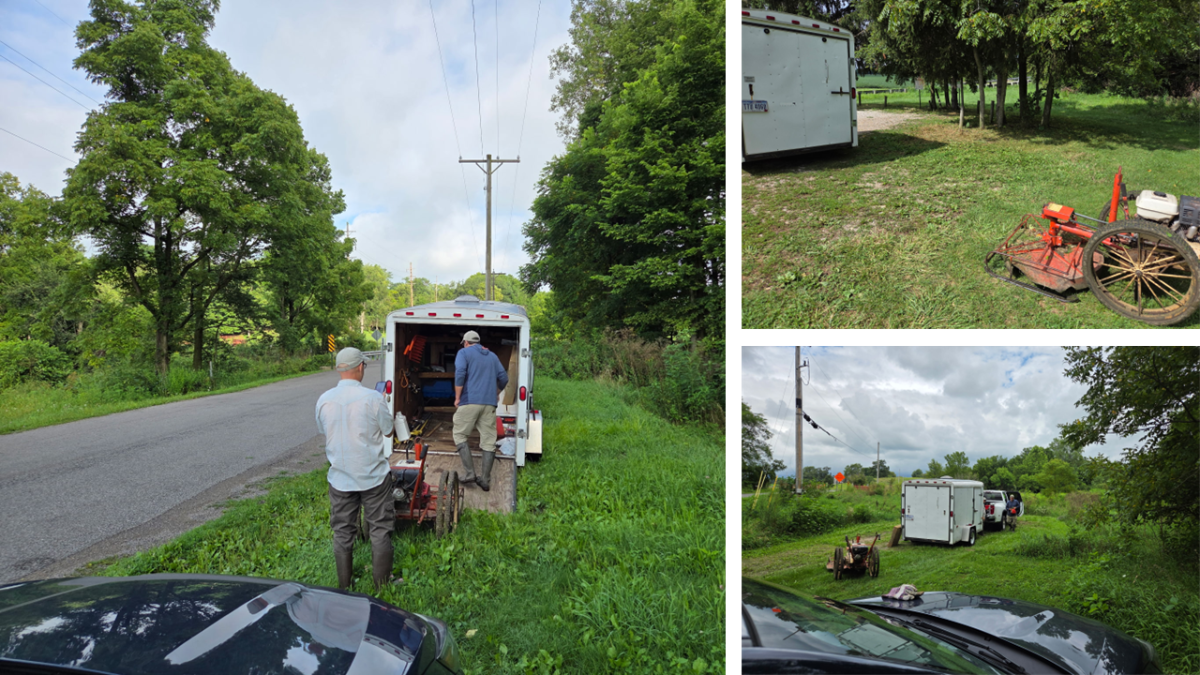
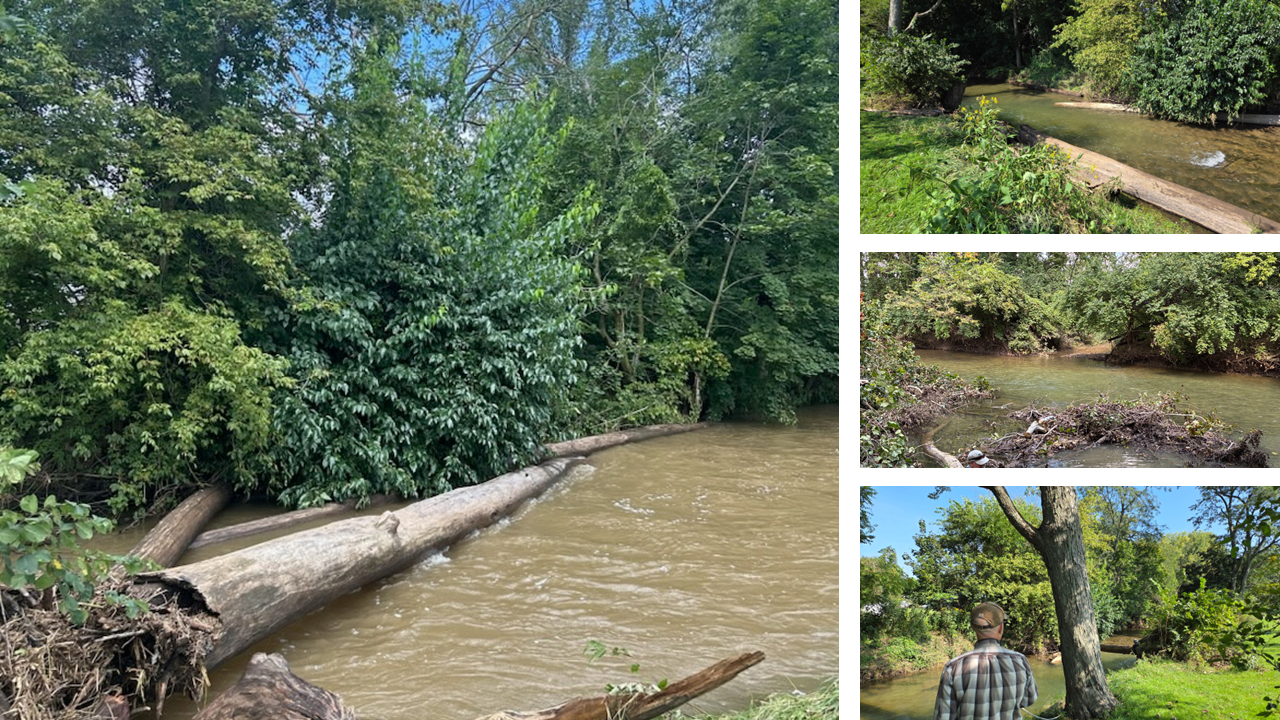
Summer work on the Mad River has included maintaining access trails at US 36, State Routes 29 and 296, Watson’s, and Pimtown (see photos). Recent storms and high water have also created downed trees and logjams that require attention.
Woody debris provides valuable in-stream habitat, but it can become a concern when it blocks passage, creates safety hazards, or redirects flow and accelerates bank erosion. Recently, the chapter work crew addressed downed trees and debris in West Liberty Park and a logjam between Millerstown and US 36 (see photos).
We continue to assess storm impacts and need your help identifying hazards. If you encounter a logjam or downed tree that completely restricts passage—or a location that appears likely to become a problem—please report it to us. Your observations help us prioritize safety concerns and respond where attention is most needed.
Protecting the Mad River Trout Fishery
Along with monitoring river conditions, we are assessing the Mad River brown trout fishery and welcome reports from anglers. Please help protect this valuable resource: keep trout wet at all times, handle them as little as possible, and release them quickly. These simple steps can make a meaningful difference in the survival of released fish.
Partner Conservation Efforts
Protecting the Mad River watershed requires cooperation among communities, landowners, agencies, and conservation organizations. The Logan County Land Trust is an important partner in the upper watershed.
The Logan County Land Trust (LCLT) updated their logo to more fully reflect the diverse natural resources and landscapes at the heart of their conservation work
The updated design retains the agricultural imagery that connects LCLT to Logan County’s farming heritage while adding a flowing stream, trees, and birds. Together, these elements represent the multiple areas of conservation on which LCLT focuses, including farmland, waterways, forests, wildlife habitat, and open spaces. More detail is at this link.
Priority Waters
The Mad River remains a primary conservation focus for our chapter and has been designated a Priority Water by both the Trout Unlimited Ohio State Council and Trout Unlimited National. We also support conservation throughout Ohio, especially in watersheds that sustain trout and steelhead fisheries and designated Scenic Rivers. The Chagrin River, an Ohio Scenic River and Priority Water identified by TU Ohio and TU National, is one such watershed. Its tributaries continue to support Ohio’s native brook trout through long-term conservation and restoration efforts led by the ODNR Division of Wildlife, Geauga Park District, and their partners. Read more about this important work elsewhere in this issue.
Want to lend a hand? We’re always looking for more boots on the ground—and in the water. To get involved with upcoming workdays or trail projects, reach out to Tom Allen at ptallen111@insight.rr.com.
Protecting Ohio’s Endangered Native Brook Trout
by Tom Allen, Conservation Chair, TU Mad River Chapter
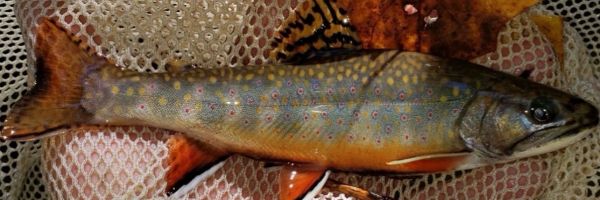
Ohio’s native brook trout are endangered, surviving in only a small number of cold, clean streams. A new statewide conservation plan finalized in June 2026 provides a roadmap for protecting these remaining populations and restoring the habitat they need to survive.
https://dam.assets.ohio.gov/image/upload/ohiodnr.gov/documents/wildlife/fish-management/Brook_Trout_Conservation_Plan_2026.pdf
There is encouraging news from Spring Brook in northeast Ohio. A major stream restoration project completed in 2021 continues to provide stable, high-quality trout habitat. Surveys in 2022 and 2024 found substantially more brook trout in the restored area than before the project, including more adult fish and a healthier mix of age groups. Additional monitoring is planned for 2026.
Geauga Park District and its partners are also pursuing projects to protect coldwater habitat, improve water quality, and restore additional streams where brook trout once lived.
For a fish with such a limited foothold in Ohio, every healthy stream matters. The success at Spring Brook shows that habitat restoration and long-term protection can make a real difference for the future of Ohio’s native brook trout.
Help us Keep the Mad Rad!
by Paul Cicconetti, Stream Cleanup Coordinator
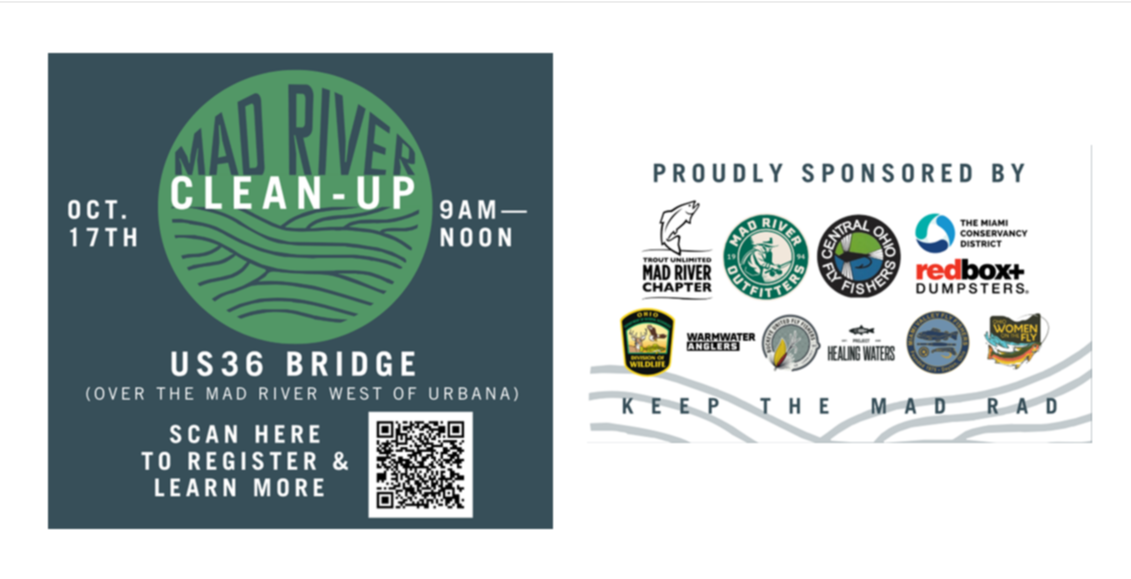
Join the Trout Unlimited Mad River Chapter and our community partners for our annual Mad River Cleanup! Register HERE
Last year, more than 30 volunteers and 10 partner organizations rolled up their sleeves to remove trash and debris from the river corridor. This year, we want to make an even bigger impact—and we need you!
The Mad River is a special place for fishing, paddling, wildlife, and outdoor recreation. Keeping it clean helps protect water quality, improve habitat, and preserve this incredible resource for everyone who enjoys it.
Cleanup T-shirts featuring the logos of all our partnering organizations are available to the first 40 registered volunteers who participate and register before October 3. We’ll ask for your T-shirt size when you register so we can plan accordingly. Shirts will be distributed at the cleanup; if you don’t show up, we will give the reserved shirt to other volunteers. We’ll have some other goodies for volunteers, too!
Whether you fish the Mad, paddle it, live nearby, or simply care about clean water, this is your chance to give something back.
Grab a friend, roll up your sleeves, and help us Keep the Mad Rad!

🎬IF4 2026 HAS A NEW HOME!
Our October 16 IF4 event is moving to Standardized Brewing in Lewis Center!
We’re incredibly grateful to Nocterra Brewing for hosting us for three years. When their unexpected closing left us scrambling, Standardized Brewing stepped up — and we couldn’t be more appreciative!
We’re excited for a great night at our new location. See you October 16! More information and tickets HERE!
Have you bought your VIP tickets yet? Only VIP ticket holders are eligible to buy entries to the raffle for a two-night stay at Rifle River Lodge. VIP ticket holders will receive one free entry with the VIP ticket and other swag. They can buy more for $20 each the night of the event, if available. We won’t sell more than 50 total tickets.
This prize generously donated by Kathleen and Sam Hanna.
The Mad River in the Spotlight
The Dayton Daily News recently featured the Mad River as Ohio’s premier trout stream, highlighting its unique spring-fed, cold-water habitat and decades of conservation work.
This rare year-round trout fishery depends on continued habitat restoration, water-quality monitoring and watershed stewardship. We’re proud to support these efforts and call the Mad River home water.
Read the full Dayton Daily News story:
How Ohio’s Mad River Became the State’s Premier Trout Stream
Fishing New Brunswick, Canada –The Restigouche and the Miramichi
by Don Antrim, Cross Village, Michigan, TU Mad River Chapter
So. This is part of the never-ending tale of the chase for Atlantic salmon. The rivers of the Atlantic provinces of Canada; New Brunswick, Labrador, Nova Scotia, Newfoundland and Prince Edward Island are legendary for Atlantic salmon and large brook trout. Lee Wulff and more recently, John Gierach wrote extensively about fishing in eastern Canada for salmon and exceedingly large brook trout. If you have the Atlantic salmon bug, the eastern Canadian provinces particularly Labrador and New Brunswick are places which instantly come to mind. You may not think of New Brunswick per se’ but you will probably think of particular rivers, the Miramichi first and the Restigouche second. Both are legendary salmon rivers. They were probably more noted a decade or more ago. New Brunswick doesn’t seem to do a particularly noteworthy job of promoting tourism and clearly not salmon fishing in my humble opinion.
Regardless of prior history, here is a recounting of a recent fishing adventure to New Brunswick on the Restigouche and the Miramichi rivers. This trip took place in early to mid-June 2026. Early June is supposedly prime time for large Atlantic salmon coming into the Restigouche on their Spring spawning migration. Grilse salmon come up the rivers a little earlier. Grilse are smaller and younger salmon having spent less time, perhaps a year, out in the ocean. Fully developed salmon spend three years or more feeding and growing while at sea. My compatriots and I were looking for the larger salmon.
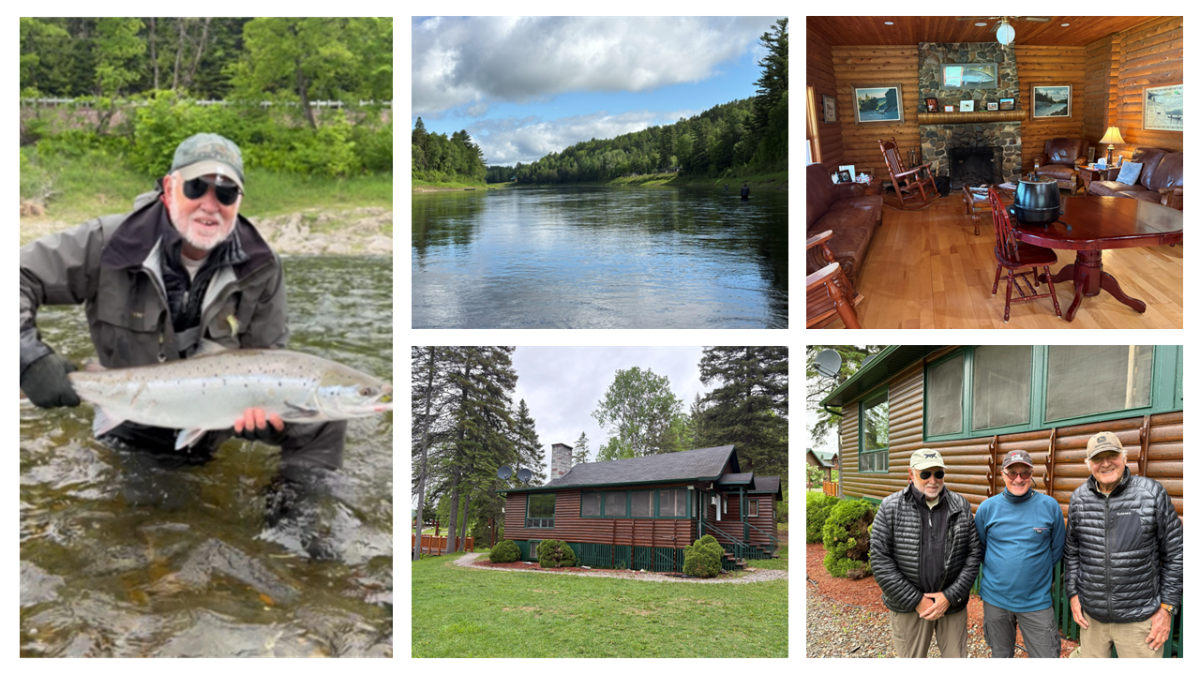
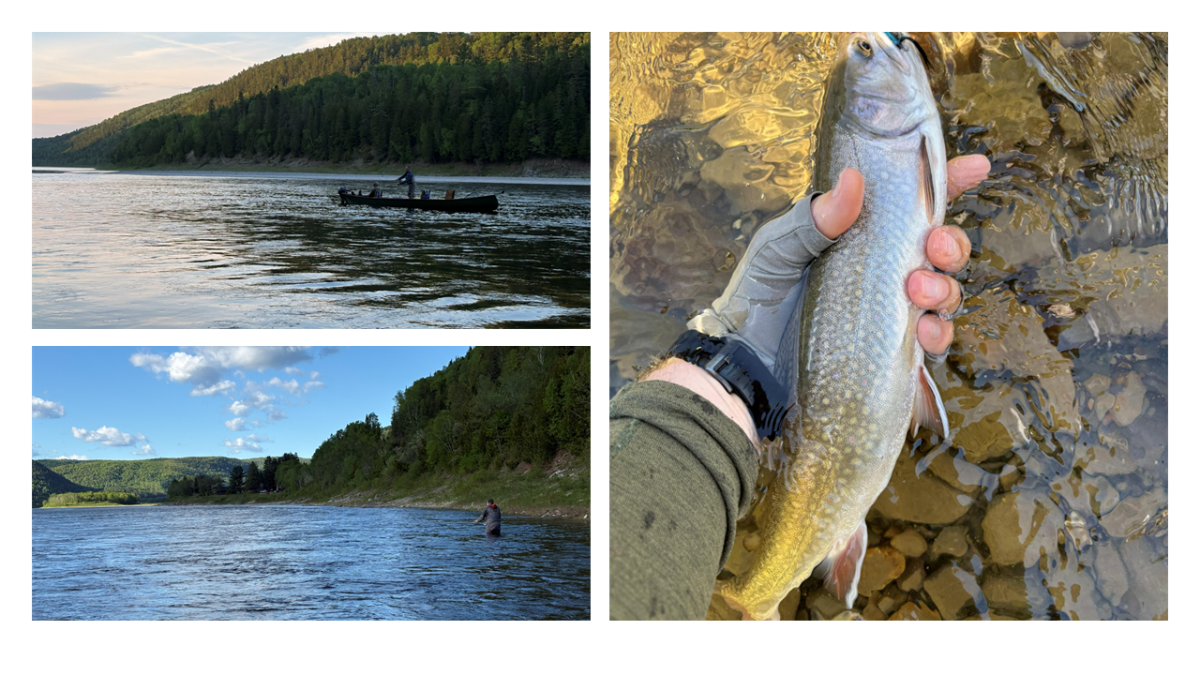
First up on our trip was the Restigouche river and the Restigouche River Lodge. The lodge is located west of Campbellton, New Brunswick. The Restigouche separates the northern border of New Brunswick from the province of Quebec. The Restigouche is unquestionably a big river. In order to fish it you obtain a Quebec fishing license offered at the lodge and with it you are able to fish both sides of the river. The accommodations at the Restigouche River Lodge, the food, the staff and the guides are all tremendous. Hospitality could not be better.
But let’s get fishing. There were salmon in the Restigouche, which I can’t always say about rivers in Scotland, and more came up during our stay. Bottom line however, you can expect to catch one Atlantic salmon in a week’s time, We were fortunate to catch two salmon. If you are set on catching Atlantic salmon, then you can fulfill your dream but be patient and don’t get your hopes up too much. My salmon, all silver, was 16 lbs. fresh from the ocean. It fought well and went airborne twice. I was using an 11ft. 3in. switch rod at the time on a run in a narrower part of the river. My rod was an 8wt with an 8wt weight forward floating line specifically designed by RIO for switch rods. I was using a traditional salmon fly, single hook, tied by my guide. The fly was green and yellow with some flash on a double throated size 4 hook. The most popular fly on both the Restigouche and the Miramichi at this time of year was probably the Green Machine or perhaps the Undertaker in a size 4 or 6.
Our next lodge was Country Haven on the Miramichi. The lodge is located a modest distance from the city of Miramichi. Clearly a legendary Atlantic salmon river. Perhaps even more well known than the Restigouche. We fished hard for 3 1/2 days. We did not catch any salmon nor did we see any salmon. We caught trout and modest sized striped bass, but that was not the goal. You could go down river to the estuary and catch stripers of varying sizes to your heart’s content. The Miramichi flows into the Miramichi Bay on the Gulf of St. Lawrence coast.
The accommodations, staff, food and guides at Country Haven were again tremendous. The people could not have been more pleasant, more knowledgeable and more accommodating. You feel as though you’re sitting at home.
While on the Restigouche you are often fishing from a Sharpe Canoe. Sharpe canoes are produced in Canada and have quite a history. They range from 20 to 28 feet. They are clearly not for portaging. They look like a narrow very long canoe with an outboard on the end. Their draw is exceedingly shallow, but they are as stable as can be. When fishing from a canoe you will generally be using a nine-foot 8 weight rod with a weight forward floating line. There are occasions when you will be using a sinking tip. Perhaps later in the season when the water level is down and you are fishing from shore or wading a single-handed rod would be a good choice as opposed to a spey rod. If you can double haul all the better but it’s not essential from the canoe. It would however be help from the shore.
If you are doing most of your fishing while wading or shore fishing on the Restigouche then a full spey rod is your best bet. This river is wide enough to handle a full on 14 or 15 ft. spey rod, 8 weight or more. The flies are smaller and lighter so you might consider a Scandi as opposed to a Skagit set up.
When fishing the Miramichi you will be fishing from and wading along the shore. We did not see any drift boats or canoes. Given that you will be wading it would be good to be spey casting and you should be fairly proficient at it in order to cover the water. If you are new to spey casting, take some lessons. The more proficient you are at spey casting the more enjoyable your trip because you will feel confident that you are getting your fly in front of the fish.
The technique for shore fishing on both the Restigouche and the Miramichi is the time-honored Scottish style of casting, let the fly swing, take two steps down and cast again. You do a modified version of the cast and swing when you are in the Sharpe canoe on the Restigouche. Your guide will simply drop down to let you swing over the next section of water. It is possible to use only a single-handed rod on both the Restigouche and the Miramichi, but your water coverage is limited even if double hauling and it requires a tremendous amount of arm work.
Overall, the trip involved roughly one week at each lodge. Our weather was at times too good with warm temperatures and sunny blue skies. We would have liked lower temperatures, more clouds and some rain. One day we did have thunder and torrential rain which reminded us that you need good rain gear and the ability to withstand some colder temperatures
As a quick note. When you arrive at a lodge, any lodge, take a peek at the fishing ledger which should be somewhere in the entry or the dining or living room. Check out the ledger on how productive the river has been in the recent past and what has been working to catch fish.
Both the Restigouche and the Miramichi are struggling mightily and have been for years to fend off or at least control the invasion of striped bass at their mouths with the ocean and then further upriver. The proliferation of stripers has resulted in a dramatic decline in the number of salmon returning to the rivers to spawn. Conservation officials and lodge owners, to name a few, indicate that the salmon parr attempting to reach the ocean and grow are devoured by the striped bass sitting in the estuaries and upstream. There is at least one program on the Miramichi to capture salmon parr at the spawning grounds and transport them by boat three miles out in the ocean. This is an expensive and time-consuming program but the alternative, a further decline in the size of the salmon run will do untold injury to the salmon fishing sport industry in the affected provinces. There are additional conservation efforts in process, but something must be done.
It goes without saying these trips are quite expensive so be prepared to part with a few dollars. Canada is a bargain right now what with the current exchange rate.
Team USA Fly Fishing competition on the Mad River
by Christian Price
Team USA Fly Fishing competitors return to the Mad River on Saturday, November 7, 2026, for the second annual Mad River Mini. Competition waters may extend from State Route 36 downstream to just above St. Paris Pike.
Last year, eight competitors caught and released an impressive 163 fish. The event is open to anyone interested in trying competitive fly fishing, with registration opening October 8 at 8 p.m. through Fly Comps.
Competitive fly fishing follows the FIPS-Mouche International Sport Fly Fishing Federation Rules and Regulations: https://fips-mouche.cips-fips.com
These rules include the use of barbless or well-pinched barbed flies, no indicators, no articulated flies or flies larger than size 8, and leaders must be shorter than two times the length of the fly rod. All flies, with the exception of the terminal fly, must be tied off of a tag. All fish must also be released and handled properly.
Recreational anglers are welcome to fish the river during the event.
The event is open to anyone interested in giving competitive fly fishing a try. Registration is $25 and will open October 8 at 8:00 p.m. through Fly Comps.
Whether you’re interested in competing or simply curious about this style of fly fishing, the Mad River Mini offers a fun, low-pressure opportunity to learn and see how other anglers approach the river.
For questions or advice before the event, contact Christian Price at chprice126@gmail.com or 740-644-0984.
Learn more about Team USA Fly Fishing | FIPS-Mouche competition rules
Upcoming Events
Latest News
- Mad River Drift Newsletter - September 2026
- 10/16/26 -International Fly Fishing Film Festival at Nocterra Brewing, Powell
- Mad River Drift Newsletter - June 2026
- Cancelled — Saturday’s Stream Water Quality Monitoring
- Reminder: Mad River TU Annual Meeting – April 18
- Mad River Drift Newsletter - March 2026
- Mad River Drift Newsletter - December 2025