- President’s Message
- Trout in the Classroom at Benjamin Logan
- April 2023 Stream Monitoring Event
- Ohio EPA Conducting a Biological and Water Quality Survey
- Working to Improve the Lives of Breast Cancer Survivors 14 at a Time
- Conservation Corner
- Returning to My Home Waters
- Fly Recipe: Thread Body Frenchies
- Upcoming Events
President’s Message
Well, it’s Memorial Day, the official start of summer. I assume that all of you have had opportunities to fish the Mad and possibly have a trip or two planned. Let’s all hope for some “normal” weather as well as decent water levels and temperatures whenever and wherever you can wet a line for the next several months.
For those of you who missed it, after a couple of pandemic-related false starts, we were finally able to have our first ever Mad River Gala which was held in conjunction with our very abbreviated Annual Meeting. The gathering at the Simon Kenton Inn on the evening of April 22nd was seemingly enjoyed by all in attendance. Happy Hour was pretty happy and the two small kegs of Mad River Brown Ale supplied by the Granville Brewing Company proved to be a real crowd pleaser. The food was great, the presenters informative and entertaining, and the raffle raised some decent cash to add to our treasury. There were lots of raffle prizes and some really great ones. Thanks again to all the contributors. Here’s a link to an album of pictures from the event.
As I stated previously, the Annual Meeting was very brief, covering the bare minimum required by TU National and Chapter by-laws. Our new Vice President, Steve Moore, was introduced along with the current Officers and Board members. The Chapter members present voted unanimously to approve them. We did not review our Accomplishments Report or Financials for Fiscal Year 2022 in any detail as they were still being finalized at the time. Those reports were due for submittal to TU National on May 15th (which they were) and are available here for review: Page 1 Page 2


Those of you who have participated in stream water quality monitoring events in the past decade or so are certainly aware of the efforts of our Director of Monitoring, Joe Nagel. Joe has done a great job for us in that capacity, so we were pretty bummed out when he informed the Board of his decision to resign from that position at the end of this year. We want to thank Joe again for all his good work and wish him well. I’ll bet that we will still see him on the stream at upcoming monitoring events; he just won’t be running the show. We have a volunteer who is willing to take over that role, so stay tuned.
Speaking of monitoring, we are working with partners to provide Level 1 training to interested members. Level 1 monitoring is what we’re doing when we’re on-stream “counting bugs.” What we find when we’re doing so is an indication of the water quality and can vary from monitoring site to monitoring site and at various times throughout the season. It’s easy enough to learn, very interesting and is even helpful with your fishing as you’ll learn what critters, i.e., trout food, are in the river. Stay tuned for details.
The Board had a follow-up meeting on May 7th to wrap things up and to plan Chapter activities and tasks for the remainder of the year. One item on our agenda was how to increase member participation in Chapter activities and attendance at future Chapter meetings and events. In the next few months, we will be sending out a questionnaire to the membership to seek input, comments and suggestions from those of you who are willing to do so. We have nearly 1300 current members in the Mad River Chapter so hopefully we will get some valuable input to help us with our way forward.
As usual, we are seeking volunteers to fill vacant roles on the Board. Anyone who may be interested in the position of Secretary, Public Relations Coordinator, Women’s Outreach Coordinator, or Webmaster should feel free to reach out to me or any of the other officers or Board members to let us know that they are interested. Well, that’s all I have for now. Have a great summer, be safe and…
Tight Lines Everybody!
p.s. Articles Always Needed!! Pam could use your help with future newsletters. If you’ve been on a fishing trip, or have something else you’d like to share, like a fly recipe, we’d love to hear about it. Write an article and send pictures to her at pamallen@tumadriver.org; it’s that easy 🙂
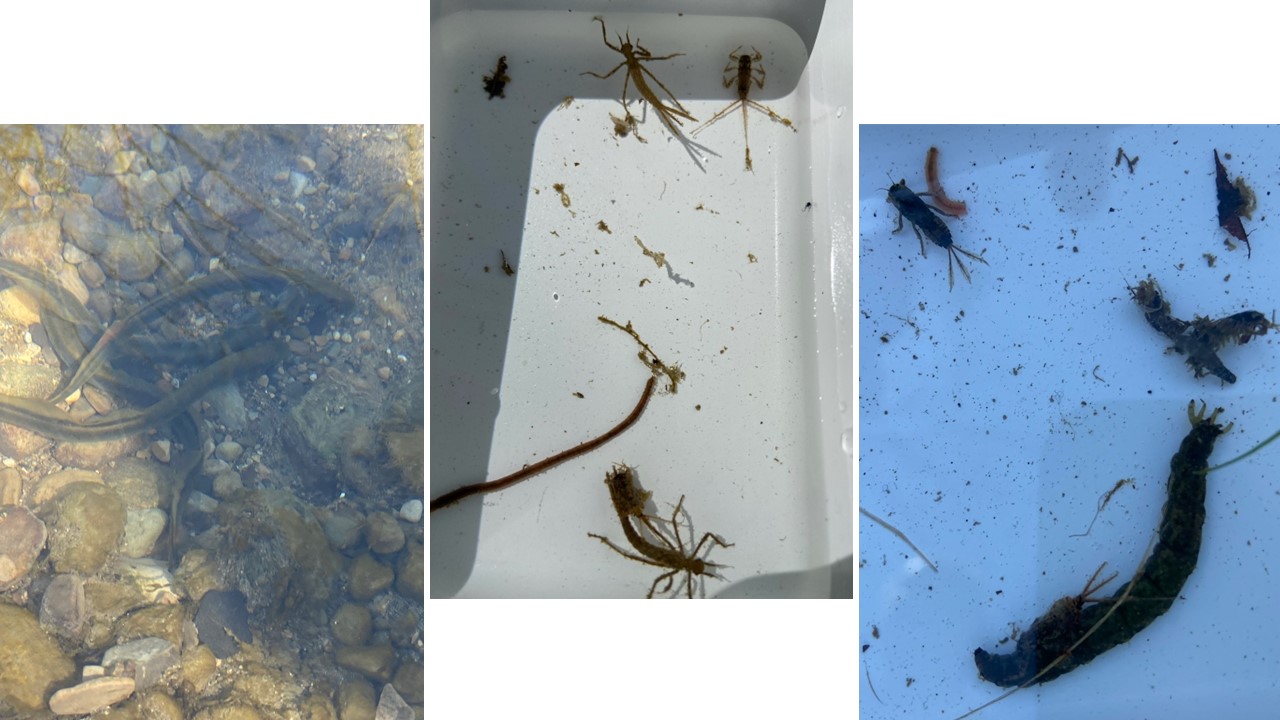
by Joe Nagel, Mad River Chapter, Director of Monitoring
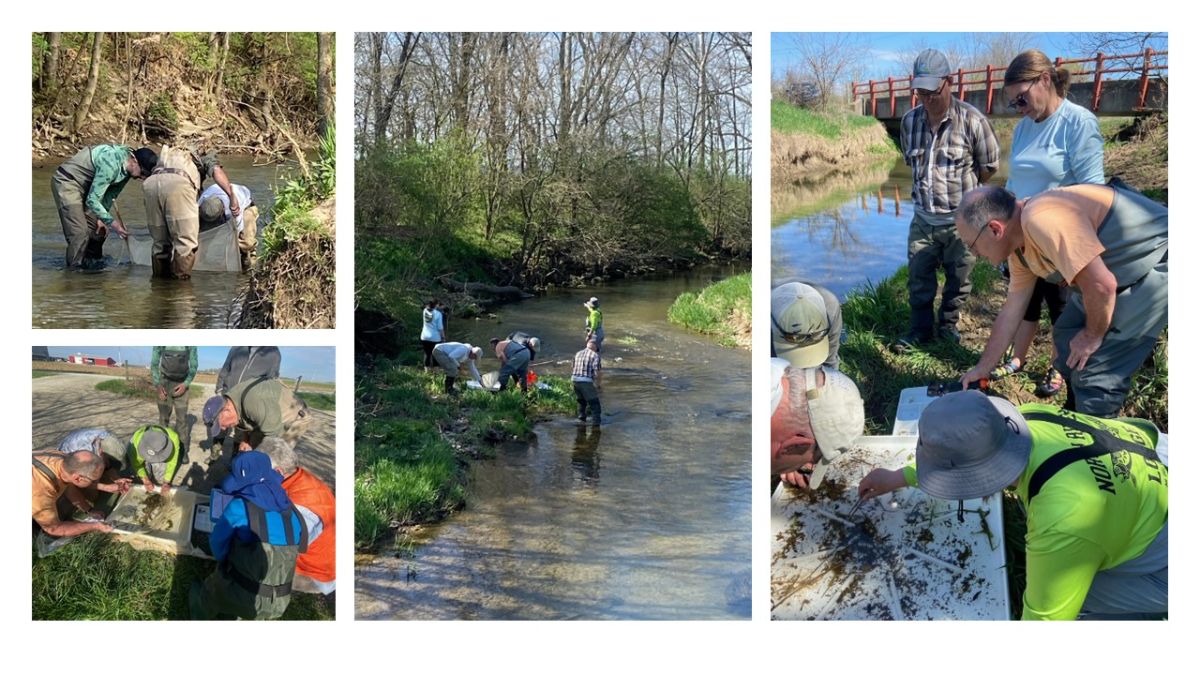
On Saturday, April 15, the TU Mad River Chapter conducted our first water monitoring session of the year. This is the first April session we have been able to conduct in several years; in previous years, high water levels forced us to cancel.
Water temperatures throughout all of the test sites were fairly consistent (56 – 57 degrees F). During our session, the gauge at US 36 was reading a volumetric flow rate of 227 cfs. Though water levels were seasonal, this is still higher than preferred to count bugs, but low enough (for the most part) to proceed (more on that later).
Here are the Level 1 Pollution Tolerance Index (PTI) Ratings scores from the session:
PTI Score
US 36
28
SR 29 / Kings Creek
30
Watson Property
30
Pimtown
21
Mac-O-Chee
36
West Liberty
28
On the PTI scale used for the above results, any score above 23 is rated as “Excellent”. And as we have stated in the past, we feel this scale is too lenient. The results do show the presence of the different types of macro-invertebrates, but they do not (and cannot) show record of diversity or density.
Observations:
- Mayflies and caddis were the most prevalent bugs present.
- No stoneflies were found during our session.
- However, lamprey were observed at Mac-O-Chee and West Liberty Park.
- Though the water level was higher than I would prefer for monitoring, it was low enough to safely and thoroughly conduct our sampling in all locations, except Pimtown. You will notice the score for Pimtown is relatively lower when compared to the other sites. I believe this is at least in part due to higher flow rate at this site, which forced us into marginal water.
In my opinion, the high water levels affected conditions at Pimtown more than any of our other 5 sites. This is somewhat ironic, as Pimtown is one of the farthest upstream sites we sample.
Additionally, I must say that I was not comfortable sampling at Pimtown under those conditions. So – should we decide to conduct future sessions when the water is this high – we will skip sampling at Pimtown.
by Tom Allen, Mad River Chapter, Conservation Chair
In 2023, Ohio EPA’s Division of Surface Water will be conducting a biological and water quality survey in the Mad River watershed which covers portions of Champaign, Clark, Greene, Logan, Miami, and Montgomery Counties. The Mad River is a subwatershed of the Great Miami River, flowing southwest until it joins with the Great Miami River in Dayton. The watershed drains 657 square miles.
Survey sites are selected to provide adequate coverage for evaluating whether water quality standards are currently being met for each beneficial use within the watershed and to establish long-term trends in water quality.
As Mad River advocates, we know how unique the Mad River is given the contribution of ground water to its quality and flow. As a Chapter, we are sharing information with Ohio EPA about our monitoring events and other information we are aware of to help shape the final report.
The Mad River watershed was last assessed in 2003. A Total Maximum Daily Load (TMDL) report was approved by U.S. EPA in 2010. TMDLs were developed for fecal coliform to address impairment of recreational uses and for nitrate, habitat, and bedload sediment to address impairment of aquatic life uses. You can find additional details on Ohio EPA’s website here: https://epa.ohio.gov/divisions-and-offices/surface-water/reports-data/total-maximum-daily-load-tmdl-program
Working to Improve the Lives of Breast Cancer Survivors 14 at a Time
by Mary Lee Hahn, Casting for Recovery
While gigantic foundations raise millions of dollars to eradicate breast cancer, and pink ribbons become so ubiquitous that they no longer raise much awareness, there is a national non-profit — Casting For Recovery — based in Montana and sponsored nationally by Cabela’s, Orvis, and Yeti, and locally by Reynolds & Reynolds, Buckeye United Fly Fishers, Miami Valley Fly Fishers, and Mad River Outfitters (among others) that works to improve the lives of breast cancer survivors 14 at a time. By teaching them fly fishing.
“It’s like whispering a prayer
In the fury of a storm”
Casting for Recovery gathers 14 survivors of all ages and stages in a beautiful natural setting, providing medical and psychological support to help smooth the turmoil of diagnosis, surgery, treatment, and reconstruction. And they teach the survivors fly fishing.
“It’s like trying to stop a fire
With the moisture from a kiss”
I attended Ohio’s retreat in 2005 as a breast cancer survivor. I was already a fly fisherwoman, so I knew the healing power of standing in a river completely in the moment, concentrating on current, rod, line, possible fish, breezes, and patches of sunlight on the water. Then in 2006, I attended the retreat as a past participant and fishing instructor. I have volunteered every year since, continuing to be a fishing instructor and eventually becoming one of the co-coordinators of the Ohio program. That first year of volunteering, I got to stand in the water beside a sister survivor and help her learn to focus on how much her cast was improving, not how much it was lacking. We laughed when she hooked my hat, and when she caught a fish, we both screamed with excitement way out of proportion to the size of the fish. My experience as a participant and then this first experience as one of the volunteers who make this program happen every year for 14 women showed me the power of Casting for Recovery to help each breast cancer survivor to heal in ways she might not even have realized she needed to heal.
“I hear them saying you’ll never change things
And no matter what you do it’s still the same thing
But it’s not the world that I am changing
I do this so this world we know
Never changes me” (Garth Brooks)
CfR will not change the world. It DOES make a very real difference to a breast cancer survivor who could be your mother, sister, wife, friend, or colleague at work.
Make a one-time or recurring donation to the Ohio CfR program here (make sure you check with your employer to see if they match your donations), applications for the Ohio retreat are here, and if you’d like to volunteer to work on the planning team or to be a Sunday Fishing Guide, the application is here.
NOTE FROM THE EDITOR: I feel privileged to have been asked to be on volunteer staff as a fly fishing instructor. The work being done with this retreat is life changing for many of these women. Any support you can give will help.
Trout in the Classroom at Benjamin Logan
by Bruce Smith, Benjamin Logan Local School District
Richard Brautigan, in his book Trout Fishing in America, which is only tangentially concerned with trout fishing, wrote, “When he could talk, he had a way of describing trout as if they were a precious and intelligent metal. Silver is not a good adjective to describe what I felt when he told me about trout fishing. I’d like to get it right. Maybe trout steel. Steel made from trout. The clear snow-filled river acting as foundry and heat. Imagine Pittsburgh. A steel that comes from trout, used to make buildings, trains and tunnels. The Andrew Carnegie of Trout! Explanation point.”
Trout are special. Beyond their role in aquatic ecosystems worldwide, a 2023 study focusing on the Driftless Area, which includes parts of Wisconsin, Minnesota, and Iowa, found that trout fishing has a 1.6 billion dollar impact.
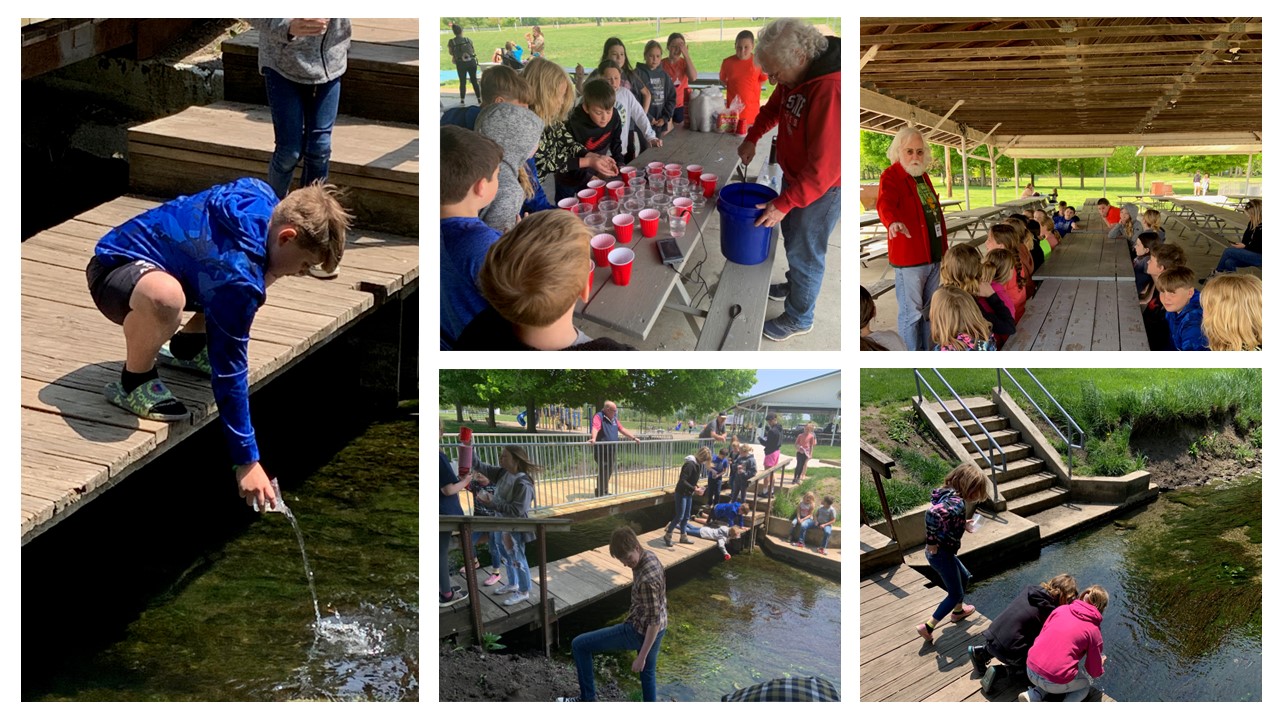
For a dozen years, Benjamin Logan students have had the opportunity to hatch trout from eggs and raise the resulting alevin to a stage where they can be released into the wild. While raising the trout, students learn to maintain proper water chemistry so that the fishes’ requirements for cold, clean water are met.
The Trout in the Classroom program is sponsored by Trout Unlimited. Trout eggs are provided by the state hatchery in London, Ohio, and delivered by the Mad River Chapter of Trout Unlimited. The release location of the fingerlings is determined by the state Division of Wildlife. Benjamin Logan’s participation has been supported by Ohio EPA grant funding acquired by Spencer Reames and Bruce Smith.
This year all three buildings participated in the program. On May 17th students from the high school and elementary school traveled to the Lions Club Park in West Liberty to release this year’s crop of 156 rainbow trout. into Onion Run, a tributary of the Mad River. The Mad River, being one of Ohio’s few cold water ecosystems, is able to support brown trout and rainbow trout.
Take care of the stream and the fishing will take care of itself.
Groundwater supports aquatic life in the Mad River and surrounding areas. The following article is from the Appalachia Ohio Alliance (AOA) May 28 E-Newsletter and shares information about their efforts to conserve a unique remnant wetland ecosystem that is also dependent upon the quantity and quality of ground water available from the Mad River Valley glacial outwash aquifer.
AOA Launches
Cedar Run Watershed Conservation Efforts
Adds 80 Acres to Cedar Bog State Nature Preserve
AOA recently launched an initiative to conserve Cedar Run, a relatively small watershed in the Mad River valley which is home to one of the most valued and unique natural areas in Ohio – the 450‐acre Cedar Bog State Nature Preserve. There are numerous rare, threatened and/or endangered species in the Cedar Run watershed ‐ virtually all of which are concentrated in Cedar Bog, which contains a rare and unique remnant wetland ecosystem, that has been eradicated from surrounding areas.
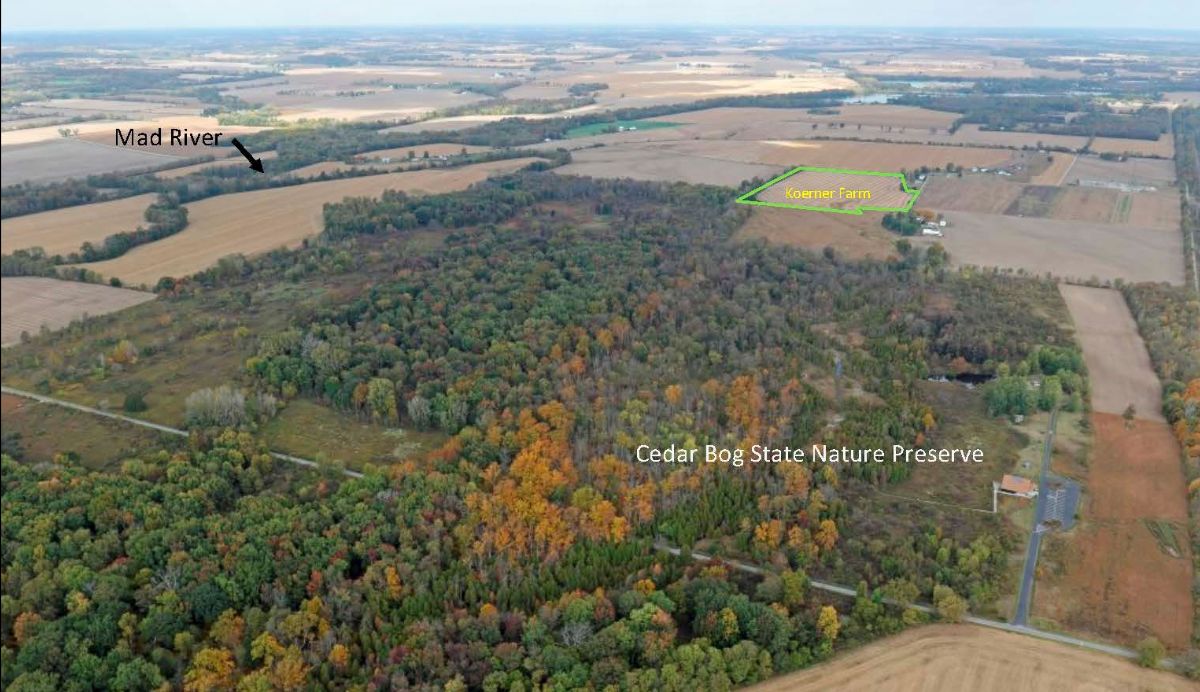
Named for the relict population of northern white cedar, Cedar Run receives most of its water from cold water springs fed by a continuous flow of groundwater arising from underground glacially influenced formations. This condition creates a microenvironment which supports a diverse and relatively unique ecosystem that is vulnerable to external forces. The resiliency and sustainability of the habitats in Cedar Bog are highly dependent on the maintenance of the current groundwater level.The unique habitats and plant associations found here were once widespread but are now confined to a small wetland “island” with no connectivity to other natural systems. As the many wetland habitats that once graced the region have disappeared, flora and fauna that were once relatively common have become rare, while those that were rare have become endangered or extirpated.
AOA is pursuing strategic actions to conserve and protect the rare and unique habitats in the Cedar Run watershed, and the conditions that allow them to exist. As part of a long term, landscape scale conservation approach AOA seeks to: protect and restore riparian areas of Cedar Run and adjacent properties that are suitable to be returned to wetland and other comparable and compatible habitats, expanding the areas that can support the unique habitats and rare species living in the watershed; help protect and enhance surface and groundwater resources; and provide suitable natural buffers for the unique plant communities.
AOA recently acquired the 31‐acre Koerner farm adjacent to the northern upstream boundary of Cedar Bog, which conserves 1,530 linear feet of the west branch of Cedar Run, a very high‐quality Class III Type B spring‐fed Coldwater habitat headwater stream which is the primary groundwater source for Cedar Bog. We also accepted the donation of a 1‐acre residential lot and previously acquired a 48‐acre parcel on the south side of Cedar Bog from Jeff Clark, protecting 1,450 linear feet of Cedar Run riparian corridor and high‐quality riparian wetlands.
Conservation Work on the Mad Continues
We are continuing to prepare plans for section 3. We will be scheduling other activities this Summer and Fall including cleanups and trail clearing. WE ALWAYS NEED VOLUNTEERS! Contact Tom Allen at ptallen111@insight.rr.com. We will also post events to our website and our Facebook page.
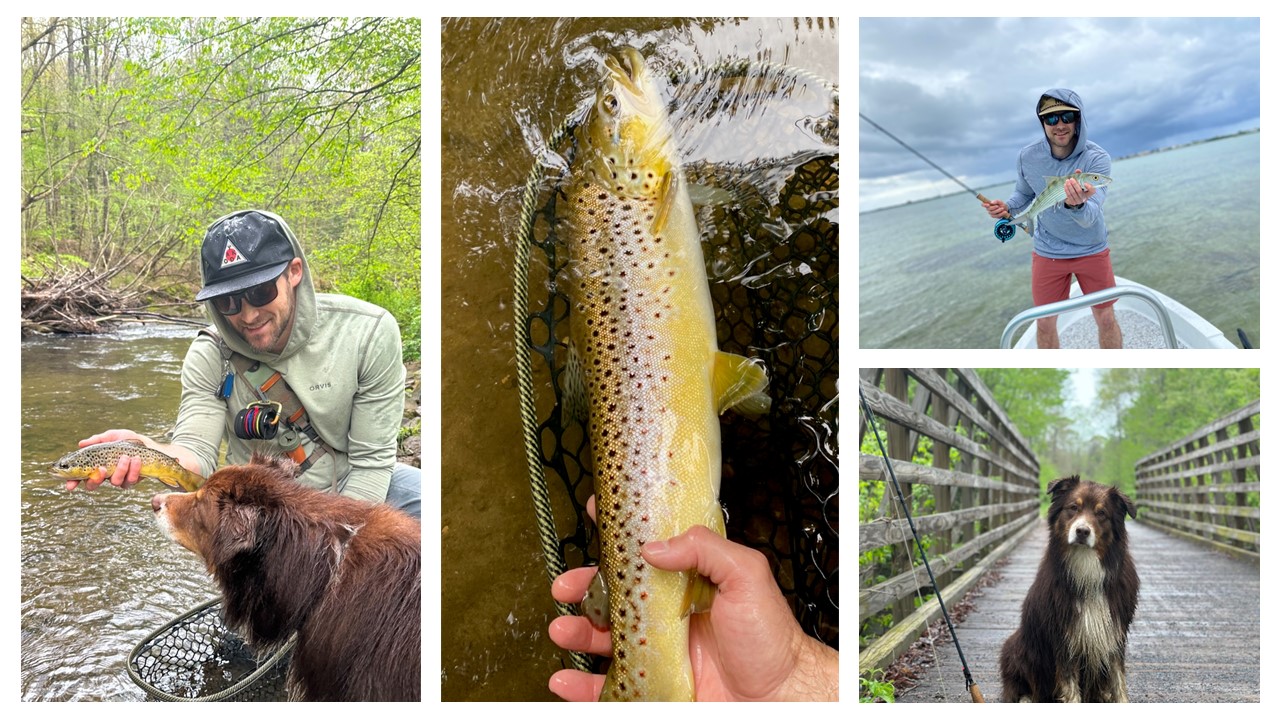
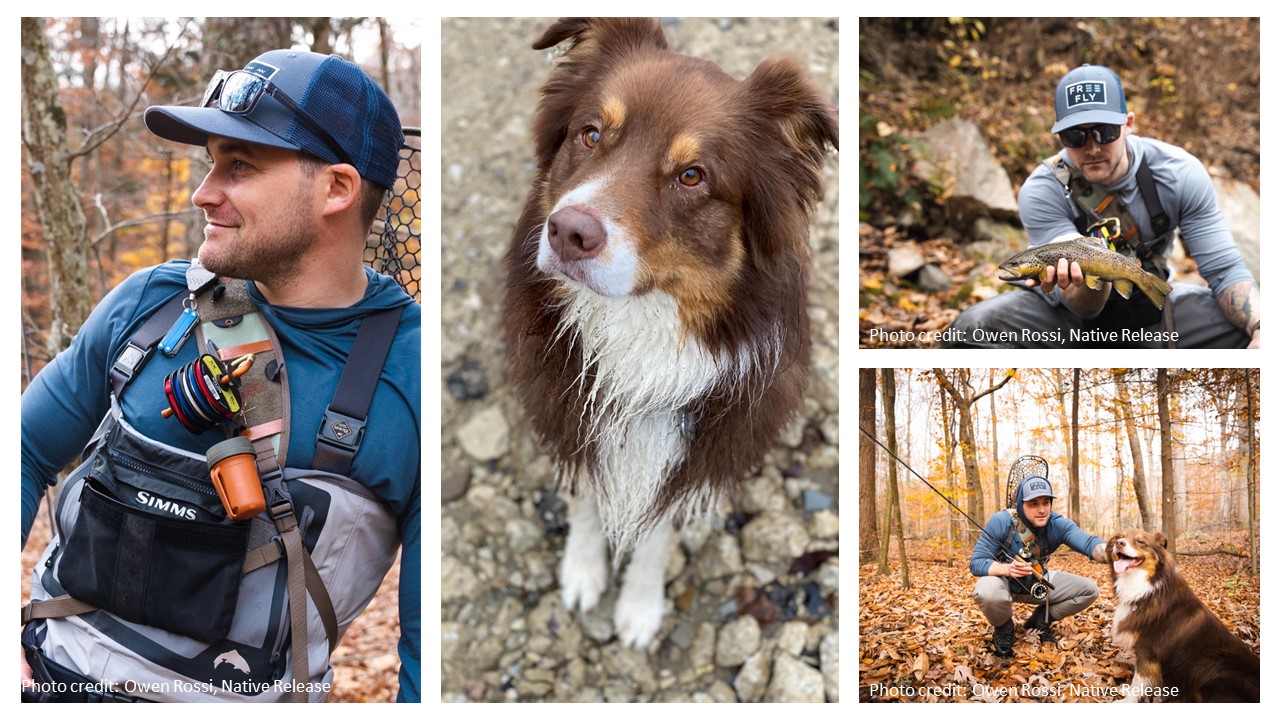
by Bryant Foreman, Mentor with The Mayfly Project-Columbus
The date was November 25, 2016. I leaned out of the seat of my rental car and slipped into my lightweight Patagonia Rio Azul waders. I specifically purchased these waders due to all the hiking I would be doing to access high gradient freestone streams in Maryland, Virginia, and Pennsylvania. In the spring and late summer, the lighter the better. However, the temperature was teetering somewhere between 30-35 degrees here in Ohio. I was pretty certain I had layered properly, but I would soon come to find out that I would need a little more than what I had prepared.
My friend Mo pulled up to the parking lot as I was putting together my rod. We shared a quick hug and caught up as we each rigged up our respective 5 weights. We were at the Rt 55 access point to the Mad River and once we had finished setting our rods up, we headed south through the narrow trail to access a section of the river that had some decent structure, riffles, and pools. Within the first 30 minutes I had a take on my pheasant tail through some fast moving water and found myself scrambling for my net. ‘Oh wait,’ I thought to myself. ‘I didn’t bring my net.’ I had flown in for this Thanksgiving break and had to sacrifice a few pieces of equipment. Unprepared, with hands freezing and knees knocking, I brought my first ever brown trout to hand. It was an 11-12 inch stocker…nothing special to any experienced fly angler. However, it was a moment that was pivotal to my development as fly fisherman. “Brown Friday” would become an annual tradition that Mo and myself have yet to miss.
Before getting that brown to nab my fly on the Mad River, I had only caught a handful of species on the fly. I was “new” to the scene, but I had experience fly fishing in my childhood as well. My stepfather’s family owned land down in Wilmington, OH. In between helping split firewood, clearing tree lines, and bush-hogging trail systems, we learned how to time our casts and hooksets on ponds and lakes down there. We would catch hundreds of bluegill and the occasional bass. After that, I didn’t touch a fly rod for years. High school and college came and went and sports took priority over most other extracurricular activities. It wasn’t until I had finished graduate school and was working in the D.C. area that I “rediscovered” fly fishing. I walked by an Orvis store in Bethesda, MD, asked some questions, picked up a few new tools, and I was indoctrinated, so to speak.
For the next 7 years I would transition from filling my weekends bar-hopping with friends and throwing away my cash for $9 Coronas down at bars in the city and headaches to saving that money for new rods, reels, and gas money for excursions into the mountains. A small inquiry about ‘what fish I could catch and where’ turned into a full-on obsession. Pin drops on new streams, rivers, trails, and campsites in Maryland, Virginia, Pennsylvania, and West Virginia gave my Google maps app chicken pox. By the time Mondays rolled around, I was already plotting out and planning the next weekend’s trip. Trips that followed included: New York, Colorado, New Mexico, the Carolinas, Michigan, the Florida Keys, Iceland, Mexico, and Belize.
Interestingly enough, the Mad River is a tributary that offers anglers an opportunity to practice and improve on a number of these techniques. It is a unique river that starts out as a slow-moving spring fed creek in its headwaters. As you travel south the river widens and allows for riffles, pools, and curves around undercut banks to form. Deciduous trees adorn the majority of the banks and the landowners in the area (for the most part) have kept all of the understory intact by letting the larger cottonwoods, birch, basswoods, maples, and oaks stick around. Around Springfield is where the water starts to warm as it gets closer to the Great Miami River. Here, trout can still be found in deeper pools and fast moving riffles as the structure allows for pockets of cooler water to be inhabited. Once the Mad nears I-675, smallmouth and other warm water species become prevalent. All that being said, you can be in a part of this river where you were finding success high stick or tightline nymphing in fast moving riffles in one part, and find that a dry-dropper is the ticket a mere 3 miles away in some slower, lower water.
Which brings us to the insects. Honestly, take your pick. Much like the differences in the way the river flows in different sections, you will find a lot of differences in the aquatic life that is available in this system. Every type of hatch you can think of on a generic list, the Mad offers: mayflies, caddis, sedges, little black stones, tricos, March browns, blue quills, brown drakes, cayhills, and sulfurs. In addition to having the nymphs that imitate a lot of these hatches earlier in their life cycles, fly anglers who brave the headwaters and spots with more vegetation also find a healthy population of fish keying in on sow bugs, cress bugs, and scuds. Larger fish can be dredged up from the cover of fallen trees and deep pools with larger articulated imitations of crayfish, sculpins, and even some minnow patterns. I find that black, tan, light brown, and pale yellow are year-round producing colors for nymphs in this river. Black stones, Walt’s Worms, Quill Body Baetis, dark Cased Caddis, and Thread Body Frenchie’s are some of my go to flies that seem to produce on a deep drift in the fall or winter and even off of dry droppers in the spring and summer months. Slumpbusters, dungeons, and buggers are all good streamers to have readily available, and any larger, dressed up variation of these will do (so long as your arm can take a beating from casting the bigger stuff).
As with any river that runs through a significant portion of farm land, you’ll find that some structure and even access down to a certain part of the river, will change over time. Erosion from farms, roads, and government lands contribute to structure changes on a yearly, and sometimes monthly basis. Most people in the fly fishing community assimilate these with a negative impact to a water system, affecting oxygen, pH levels, turbidity, and general waste runoff. However, it seems that the work that the TU does and the dialogue they have with everyone in the community allows for them to do their best to keep 30+ miles of the river from becoming an issue for the wildlife that call it home. Again, take this with a grain of salt as it’s coming from a guy who just moved here after being away for 10+ years, but after talking to those involved, they have a clear and direct initiative for what they want to see done…and they do it. You love to see it.
For a while, the purpose of a lot of those aforementioned long weekends and scheduled destination trips were for the sole purpose of catching fish. However, the years have shaped me into someone who yearns to be connected to the ecosystem and understand its mysterious ways. I now bring a field journal to document plants, hatches of insects, birds, amphibians, etc. I think that understanding the ecosystem that you’re exploring will not only benefit you as an angler, but also allow you to become a better student of the environment as a whole.
As a trained microbiologist and virologist, the process of documentation and keeping a “lab notebook” has always been a constant. Taking a step back and looking at a river or forest ecosystem through that lens allows me to say to myself and inquire, ‘This is one big experiment. Which variables can we improve upon to make this go smoothly? What external and internal factors do we have to consider? Who involved will help ensure that this experiment is a success? What is the length of time we’re measuring? What tools can we utilize to improve or streamline this process? How are we going to analyze and generate data that can help future projects?’ This is where the Mad River TU Chapter really seems to thrive and gets the utmost respect from me. It’s not only those individuals who contribute to the future success of this place but others involved as well. I recently transferred my membership from The Mayfly Project in Silver Spring, MD to the one in Columbus, OH. We had an outing to scout locations for the foster kids we work with, and every single person hauled out trash in their nets without even mentioning it. Likemindedness like this not only facilitates a lead-by-example initiative within the community, but provides an example of good practice for the future generations who would like to someday spend as much time on the water as we do.
While I will be keying in on more warm water species in the greater Columbus and Cleveland areas moving forward, the Mad River will always be a special inland trout destination for me. It played a pivotal role in my interest of this hobby 7 years ago and has been a staple for a yearly tradition with friends to spend a frigid day in November trying to nab a brown while staving off the urge to go back home and warm up by the fire with football and Thanksgiving leftovers. The Mad River is both challenging and rewarding. With the right preparation and monitoring, one can have a personal best day out there on the water… but even if you’re at the end of a session where a skunk may be imminent, have a look around. Make note of the wildlife around on the banks, in the trees, and nearby pastures. Listen to the water run, and flip over some rocks and logs to see what else calls these waters home. You just might find it more special than you once thought because there are well over a hundred miles of highway to get to another river like it.
p.s., If you ever see me or a little red Aussie out on the water, come say hi. We like to share flies and fish stories.
Cheers
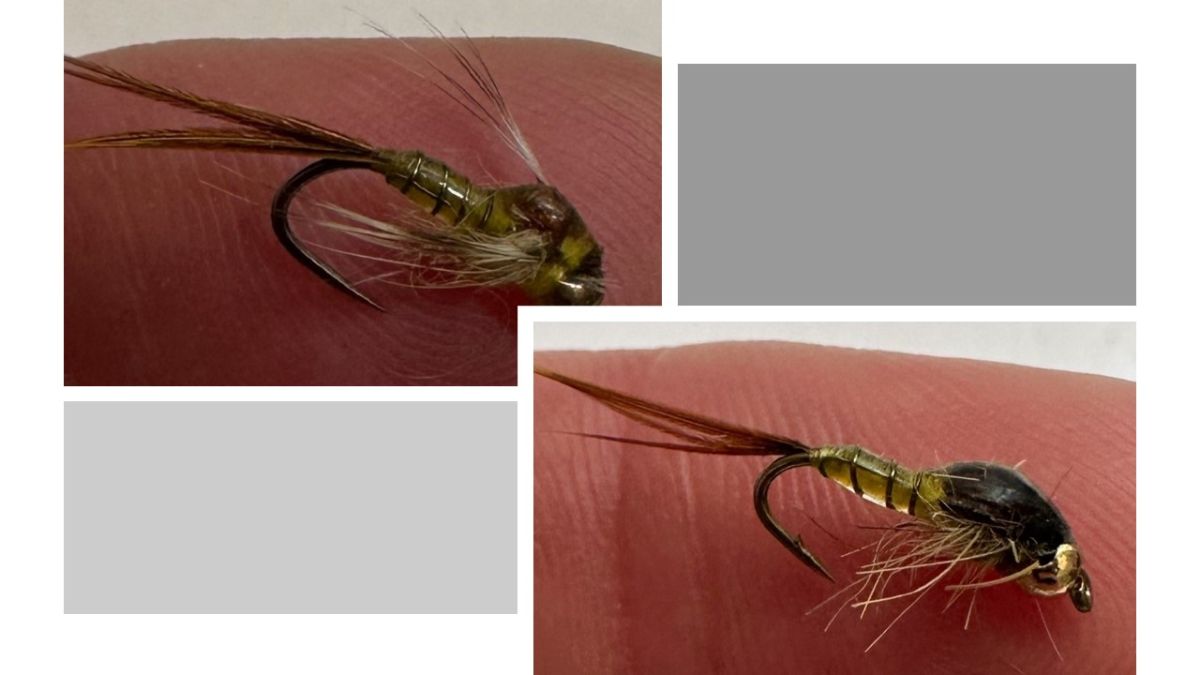
Hook: Firehole 637 size 18 hook
Bead: Slotted tungsten 5/64
Body: UTC 70 in yellow
Rib: UTC ultra wire black or green
Resin: Loon Outdoors Thin
Tail: Yellow Pheasant tail
Legs: Gold Hares Ear OR Hungarian partridge/Wapsi superfine dubbing in gold
Wing Case: Brown Pheasant tail
Upcoming events:
Water Quality Monitoring
- 6/24/2023 — Meet at US 36 Bridge at 9:00 am. Come learn about the food supply and stay to fish in the afternoon.
- 8/26/2023 — Meet at US 36 Bridge at 9:00 am. Come learn about the food supply and stay to fish in the afternoon.
Upcoming Events
Latest News
- One Calendar for Our Fly Fishing & Outdoor Community
- Mad River Drift Newsletter - September 2026
- 10/16/26 -International Fly Fishing Film Festival at Nocterra Brewing, Powell
- Mad River Drift Newsletter - June 2026
- Cancelled — Saturday’s Stream Water Quality Monitoring
- Reminder: Mad River TU Annual Meeting – April 18
- Mad River Drift Newsletter - March 2026