President’s Message
You may recall that, in my last newsletter, I stated that fall was typically my very favorite time of the year. Well, this past fall only reinforced that sentiment. For one, my significant other and I bought a new house last fall; way fewer trees (and therefore falling leaves to rake) and no real yardwork since our homeowners’ association fees take care of those dreaded chores. The other reason is my annual fall trip to West Virginia to chase wild brook trout in the backcountry.
My fishing partner and I love going down that way in the fall (we like going down there in the springtime as well, but the scenery isn’t quite as spectacular then) because the weather is great, the scenery is beautiful, and the fishing is typically great as well. We have found that if we time it wrong and don’t get there before the leaves start to fall, then fishing becomes a bit more challenging and treading along the streambanks can becomes fairly treacherous.
This year, we timed it perfectly. We were there during the week before the first weekend of “leaf-peeper” season. The fall foliage was at its peak and the crowds hadn’t arrived yet. The scenery on the drive down and around the back roads in the area was simply stunning.
Our usual M.O. is to leave Columbus early in the morning and arrive in the area around lunch time. We head straight to our favorite “blue line” stream, eat a sandwich, then gear up to fish until 5:00 or so before heading to wherever we are staying for the trip. We always fish this stream first because it is not easy and we prefer to do it while we’re fresh. After the first day fishing our favorite, we then take it easier (a relative term) the rest of the time.
Our “favorite” involves a short (20-25 minutes) hike down a trail above the stream that runs through a ravine. We then bushwack through the trees in the gully down to the stream. We then leap-frog our way fishing upstream; sometimes having to hold our (short 2-wt) rods in our teeth to climb over boulders and occasionally fighting our way through the rhododendron that line the banks. Even when the leaves haven’t fallen, one must tread carefully as any rock that you step on just might move on you.
After 4-1/2 hours or so of this (as well as catching a bunch of absolutely beautiful, absolutely wild brookies), we look for a place to fight our way back up the tree-lined slope to the trail that leads us back to the car (usually about a 10-minute walk) and our celebratory beer that we drink while talking about how worn out we are and just what a magical place this is.
In the 25 or so times that we’ve fished this stream, we have never seen another fisherperson. We never see another soul in the fall and only very occasionally see a ramp hunter on the trail above the stream in the spring. There are usually 2 to 3 eleven-inch fish caught during the day, usually brilliantly colored males, and the rest much smaller.
This time, however, we both caught 4 or 5 fish in the 11-12” range and hardly any “dinks.” We had fished a different stretch than we usually do but I think it was just the fishing gods being kind. Both of us are in the “fall” of our lives and we had talked more than once about this possibly being the last time we would ever be fishing this stream; it’s just too strenuous.
As we drank our beers, we discussed where to fish the next day. The great fishing that we had that first day revived us. We weren’t as worn out as we thought we were. Let’s just fish the stream again tomorrow, fish a different stretch, we can handle it, it may be our last time here. We can handle two days of fishing here.
It was like night-and-day. Even though the weather and water conditions were identical, the next day’s fishing was the worst day we ever had on our favorite stream; my buddy caught three and I got “skunked”! Unbelievable. In the 25 or so days fishing there, neither of us had ever “worn the collar” at the end of the day. Of course, we still had to exert the same amount of effort as any other day so when we got back to the car, we were a bit melancholy. Really? Our last day ever here was pretty much a bust.
The heck with it…let’s just come back again tomorrow and fish our usual stretch. We simply can’t have our last day here be the only bad day ever. So that’s what we did; fished three days in a row; it didn’t kill us and it was completely back to normal. You just never know.
On our drive back to Columbus, we discussed our ages and conditioning yet again. You know what? Maybe it’s just the beginning of the “fall” of our lives. We’re planning on going back next fall; but probably just one day on our “favorite” and it will be spectacular.
Tightlines Everybody!
p.s. Articles Always Needed!! Pam could use your help with future newsletters. If you’ve been on a fishing trip, or have something else you’d like to share, like a fly recipe, we’d love to hear about it. Write an article and send pictures to her at pamallen@tumadriver.org; it’s that easy 🙂
by Pam Allen, Member, TU Mad River Chapter
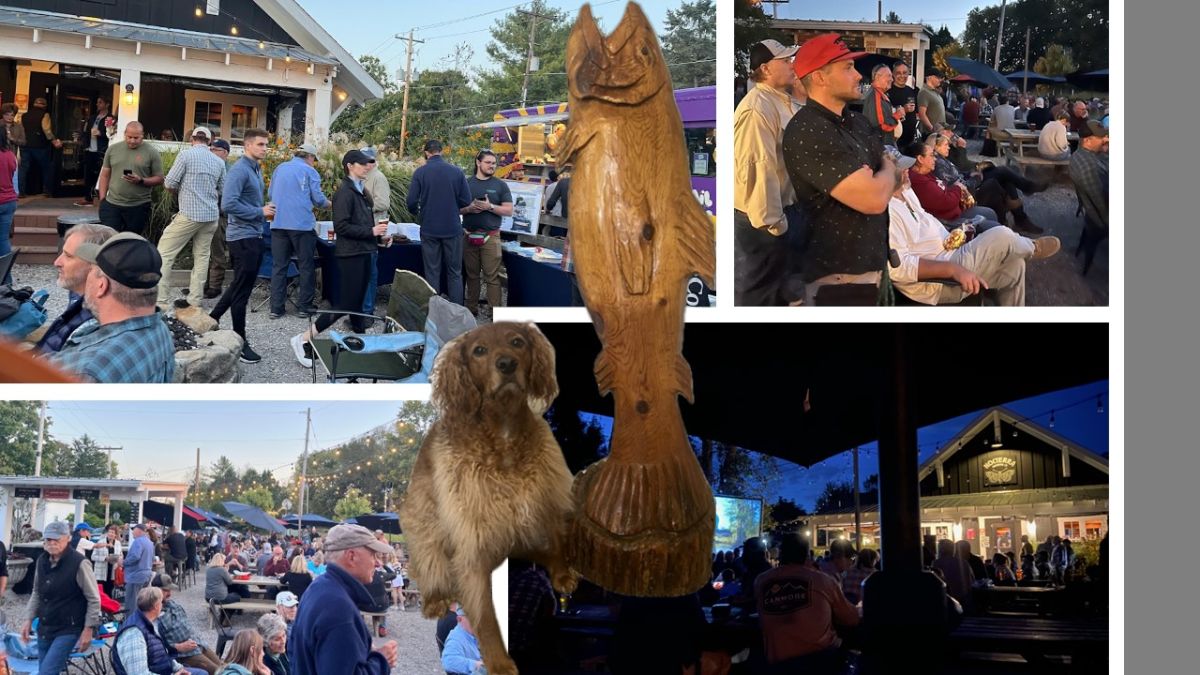
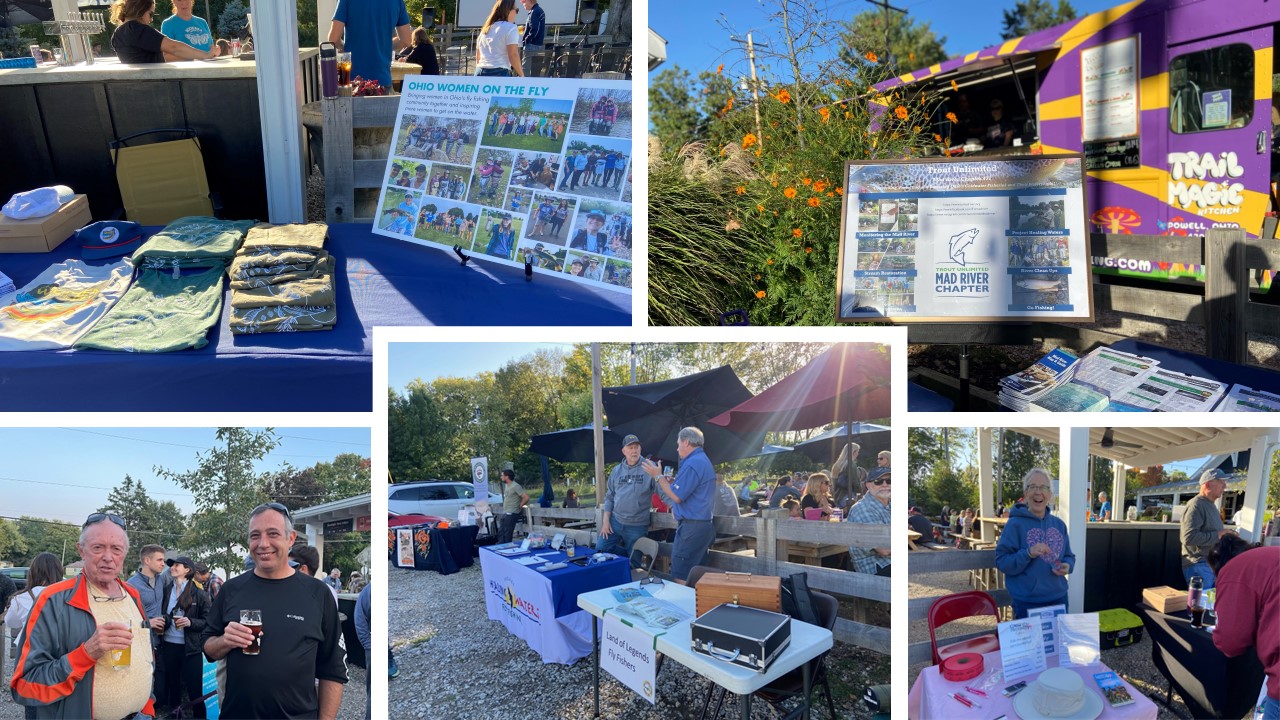
We had a great turnout and the weather was perfect when our Chapter hosted a screening of the International Fly Fishing Film Festival (IF4) at Nocterra Brewing, in Powell, north of Columbus on October 6th.
Our main goal for the screening was to bring together the fly fishing community in Central Ohio (and beyond) — we definitely met that goal!! We also had a raffle and silent auction for stream restoration work the Chapter is planning for the Mad River.
Thank you Mad River Outfitters, Cabela’s, Orvis-Worthington, Cynthia Hvisdos, and Kevin Ramsey for the raffle and silent auction donations.
Before the film started, participants learned about fly fishing activities and products offered by Backcountry Hunters and Anglers, Public Lands, Land of Legends Fly Fishing, Project Healing Waters Fly Fishing, Orvis-Worthington, Casting for Recovery, The Mayfly Project, Ohio Women on the Fly and Scioto Made.
National Leadership Council Update
by Matt Misicka, NLC Representative
There are likely many different reasons you may have originally joined Trout Unlimited. Maybe it was the Fishing advice you could glean from the pages of TROUT magazine. Perhaps it was to interact with a like-minded Community of your local chapter. Or you could have been drawn first to TU’s cold-water Conservation mission before you ever picked up a flyrod. I’ve met people that identify with all these initial introductions. Hopefully, for whatever reason you joined, you’ve found inspiration in the stories, friendships, and actions of Trout Unlimited.
Opportunity for inspiration abounded at this year’s Trout Unlimited annual meeting, known as CX3 for its celebration of Community, Coldwater, and Conservation, in Spokane, Washington the last weekend of September. Over three hundred anglers, conservationists, and partner organizations spent three full days together, engaged in presentations, National Leadership Council workgroup sessions, dinners, awards, and a wee bit of fishing on the nearby rivers.
For anyone that has heard TU’s CEO Chris Wood present a State of Trout Unlimited in-person will attest, Chris’ on-stage persona and delivery is a treat. I’d encourage you to make the time to watch this year State of Trout Unlimited presentation by visiting TU’s homepage at https://www.tu.org/ and learn about just a few of the successes that can be chalked up to our shared commitment to care for and restore our cold-water rivers and streams.
I would also encourage you to read the biographies of the recipients of this year’s various awards that were presented at the annual meeting. They can be found in the Fall 2023 edition of TROUT magazine. While they were all very entertaining and inspirational, Conservation Professional of the Year Matt Jaeger’s acceptance speech was really fantastic. Although it is not recorded in its entirety, you can listen to the final three minutes of it on YouTube by searching for “Matt Jaeger tu.org”. Matt’s full speech could have served as a keynote address. It was that good.
My wife and I drove out to Spokane for this year’s meeting. We started in mid-June with a trip to Lake Tahoe for the National Wildlife Federation’s Annual meeting, before driving north to Tuktoyaktuk on the Arctic Ocean, exploring much of the interior of Alaska and western Canada, and returning to Montana, Idaho, and ultimately Washington. We covered a total of 19,509 miles in our truck camper before we reached home again.
The 2024 TU annual meeting will be MUCH closer to home in the Twin Cities of Minnesota from September 25-29. If you want to experience the uniquely TU blend of cold-water, conservation, community, and likely a bit of fishing in Driftless, you should consider attending, all or some of, CX3 next year.
If there are questions I can answer about this past year’s annual meeting, or next, please don’t hesitate to contact me via email at mattmisicka@gmail.com.
Stream Water Quality Monitoring Results
by Joe Nagel, TU Mad River Chapter
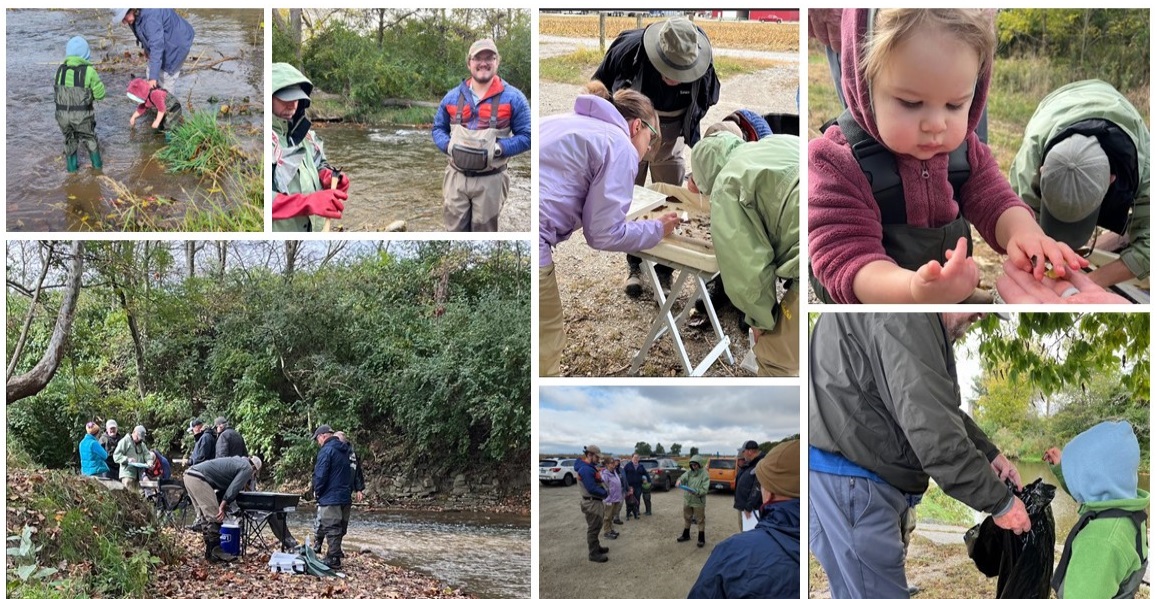
On Saturday, October 7, TU Mad River Chapter members met on the Mad River to conduct our third and final monitoring session of the 2023 season.
Here are our Level 1 results from the monitoring session:
Rt 36 . . . . . . . . . . . 35
Rt 29 . . . . . . . . . . . 32
Watson Property . . 34
Pimtown . . . . . . . . . 25
Mac-o-Chee . . . . . . 27
West Liberty Park . . 32
(On scale used for the above results, any score above 23 is rated as “Excellent”. The results show the presence of the different types of macro-invertebrates, but they do not (and cannot) convey information about bug diversity or density.)
——————————
As is usual for this time of year, the density of bugs was less, and the size of the bugs seemed to be smaller. The most prevalent bugs found were mayflies and caddis. The river was low (~100 cfs at the Rt. 36 gauge), and water temps were steady at 54 degrees.
On a personal note – it has been a pleasure serving as the Manager of Water Monitoring for these past several years, and I thank you for giving me this opportunity. But, I am certain the time has come for me to step aside. I look forward to seeing how the program evolves under Tyler’s leadership.
Ohio Council of TU Identifies Priority Waters
by Chris Steffen, Vice Chair, Ohio Council
Trout Unlimited’s strength lies in its grassroots network of passionate volunteers deeply connected to their communities and water ecosystems. This network collaborates with a team of professional staff, including biologists, lawyers, and organizers, capable of turning millions of dollars into impactful campaigns for watershed and regional conservation. Partnering with various entities, from state and federal agencies to industry stakeholders, Trout Unlimited has expanded significantly in the past decade, investing over $75 million annually in on-the-ground efforts. Despite these efforts, the decline of wild and native trout, salmon, and steelhead persists. The organization aims to address this challenge by developing a shared agenda focused on identifying and prioritizing critical waters, believing that such a targeted approach can reverse the negative trend and deliver powerful conservation outcomes.
The Ohio Council of Trout Unlimited has announced the designation of Priority Waters for our state, aligning with the focus on critical cold water habitats as requested by the TU National office. Our designations include Top Priority, Priority, and Heritage Waters. Lake Erie and the Chagrin River Watershed, home to wild and native lake trout and brook trout, respectively, are classified as Top Priority Waters. Numerous streams with a history of stocked trout capable of wild reproduction are designated as Priority Waters, such as Mad River and its tributaries. Heritage Waters, identified as stocked waters with unique community value, include Apple Creek, Clear Fork River, Ashtabula River, Conneaut Creek, Vermillion River, Rocky River, Cuyahoga River, Grand River, and Clear Creek. The Ohio State Council emphasizes public access in these designations, maintaining an updated list and encouraging member support for the preservation of these vital habitats in line with Ohio TU’s mission to protect and conserve the state’s cold water resources.
TU Clear Fork Chapter Awarded Embrace a Stream Grant
by Daral Jackwood, President, TU Clear Fork Chapter
Do you fish Apple Creek? Consider making a donation to help with its restoration. The Clearfork River Trout Unlimited (CFRTU) Chapter recently received a grant from Trout Unlimited to support the restoration of Apple Creek where it runs through Grosjean Park in Wooster. Catastrophic flooding events have threatened the stability of this part of the stream where their Chapter stocks rainbow trout each year. The funds from the Embrace a Stream grant will get them started, but they need help!! Trout Unlimited has set up a fundraising challenge for the Embrace a Stream Grant.
Your donation is tax deductible and 100% of the funds will go to the CFRTU Chapter to support the restoration efforts of the Apple Creek fishery.
You can give at: https://go.tulocalevents.org/easchallenge2023/t/clearfork
Make sure you direct the donation to the Clearfork Team during checkout.
The first $500 raised will be matched 1:1 by Trout Unlimited. Please give whatever you can to support this local fishery their Chapter uses for education and Trout in the Classroom projects. Donations will be accepted beginning November 27th through midnight on December 3rd. Thank you.
Project Healing Waters Fly Fishing
by Jarod Klucho, PHWFF Columbus Lead
HOLY FREAKING COW! Thank you, thank you, thank you! For those that weren’t at the Project Healing Waters Fly Fishing fundraiser at Nocterra Brewing on November 2nd, I was literally overcome with emotion when I found out our raffle sales total. I appreciate everyone that has cheered us on during this journey!
Also thank you to our volunteers who do the hard work and let me take all of the credit. I really couldn’t do this without them showing up and caring so deeply about our mission.
Special thanks to Mitch Tucker and Tom Panek who filled out the vast majority of the over 600 presale tickets and ran the ticket booth all night while I got to enjoy everyone’s company.
Two years ago when we started our partnership with Nocterra Brewing, we thought it would be a fun idea to have a charity raffle during November when they were giving us a portion of their Take a Hike beer sales. We hoped to raise $500 so we could send 2 vets on a guided trip. That year we raised $1200. Last year we did it again. We were sitting with around 60 members at the time and we raised $1800. AMAZING! Right?!
This year we had doubled in size to 107 members and we’ve been stressed because our budget didn’t match our needs.
So we set out to try to really make the most of this fundraising event. Our goal was to raise over $3000 to cover our steelhead trip. We had some amazing prizes donated by the community, so we thought that would be possible. Not only was it possible but we DOUBLED our goal. We raised $6000!!!
Thanks to our donors
@deadreckonknives
@briarwoodsportingclub
@publiclandsshopcolumbus
@_sarajanerobz
@madriveroutfitters
@mamamimispizza
@sciotomade
@mastheadbrewing
@fatteybeer_ohio
@smokeoutbbq
and others!
Thank you again to everyone who showed up and bought tickets or just came out to enjoy an evening together and to support our program. The energy was real and what we are doing to help veterans in OUR community is very, very real. From the bottom of our hearts, Thank you.
Conservation Work on the Mad Continues
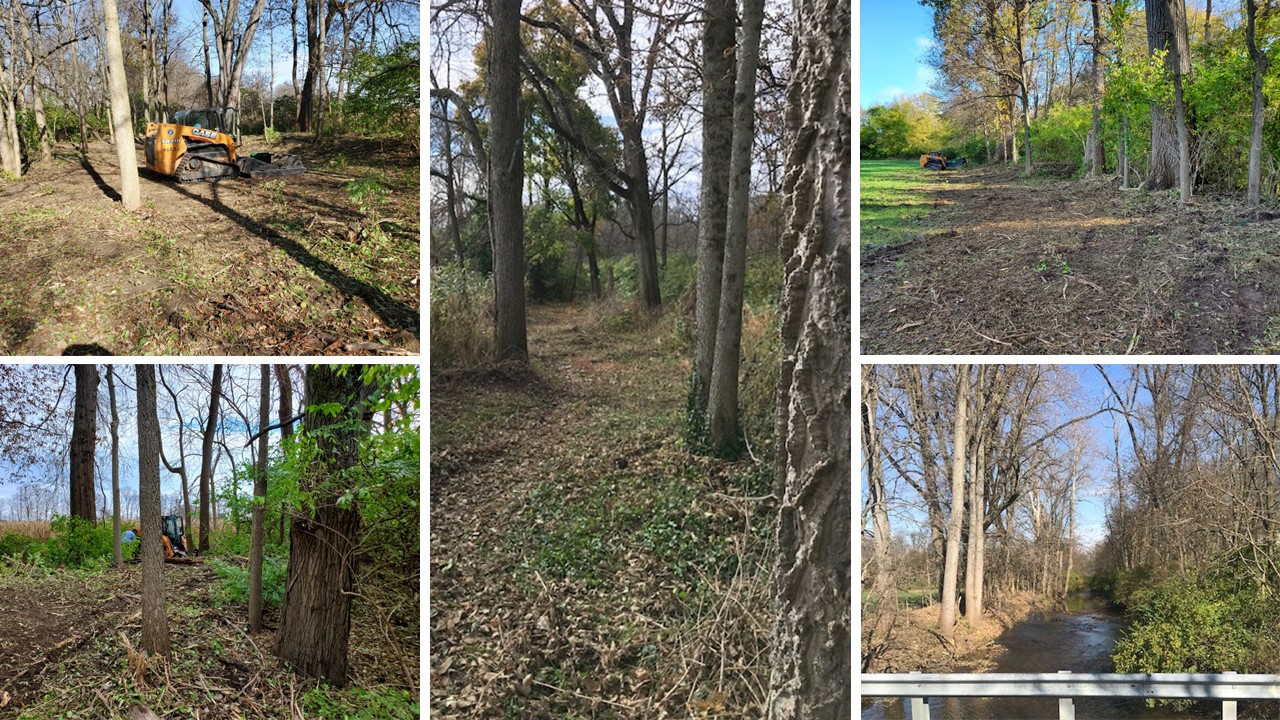
For many years the TU Mad River Chapter and its volunteers have addressed issues on the Mad, including litter, logjams, bank erosion, trail clearing and in-stream habitat. The most difficult part of trail clearing, has been removing invasive honeysuckle. This variety of honeysuckle is not only an impediment to access, it also doesn’t allow the growth of native plants and the bare soil is vulnerable to erosion. It has a significant negative impact to the quality of the riparian area. Thanks to ALL of the volunteers that came out 2 days this fall to continue clearing honeysuckle in and around the Pimtown Rd. area. But, the star of the work was Bo Ward with his track loader and the special clearing/mulching attachment. It was so much more efficient and effective. With the clearing it will make it easier to conduct bank stabilization, in-stream habitat improvement and planting of native trees. Also, with a more efficient method of clearing honeysuckle, we hope to use it on other areas, including the access at St Rt 29 and 296.
Improvements to the Trout Program
The ODNR-DOW has completed the fall stocking of the trout streams with yearling browns in the upper Clear Fork and Mad rivers and rainbows in the lower Clear Fork River and Clear Creek. ODNR-DOW identifies the brown trout streams as PUT and GROW and the rainbow trout streams as PUT and TAKE. The lower Clear Fork and Clear Creek are marginal in sustaining trout, because of the water temperatures during the summer.
The strains of the brown and rainbow trout ODNR are raising are excellent and they do a good job. But, are there actions that can be taken to improve fishing opportunities for everyone? There are many of us that prefer fishing for trout in streams, but pressure, demand and other impacts seem to be limiting the opportunities. The goal should be to have a sufficient number of trout for an extended period of time for everyone to have a quality fishing experience, on all of the trout streams. I personally get a lot of satisfaction when youth, first time stream anglers, veterans, etc., catch their first trout.
Here are some potential actions that could be taken to improve the Ohio trout stream fishing experience. Our Chapter will be discussing these ideas with other TU Chapters, TU State Council and other fly fishing organizations. We have raised these concerns with ODNR-DOW over the years. Some improvements have been made, but more can be done. If there is enough support from the fly fishing community, we will advocate for additional changes.
- stock sufficient numbers of trout to meet pressure, demand and stream conditions;
- provide donations to assist ODNR-DOW with hatchery expenses;
- if ODNR-DOW has limitations in the number of trout to stock, allow supplemental stocking from approved certified hatcheries;
- make regulations clear, that on streams the limit is 2 trout per day and on brown trout streams they also have to be 12″ or larger;
- stream signage with regulations, along with recommendations on proper handling of trout that are released;
- distribute stocked trout in more locations and if needed, request assistance from volunteers; and
- on ALL trout streams establish DELAYED HARVEST regulations of catch and release from Oct. 1st to March 1st and fishing with artificial, single barbless hooks.
Of course we ALL should continue working to improve the overall watershed quality of Ohio’s trout streams.
WE ALWAYS NEED VOLUNTEERS! Contact Tom Allen at ptallen111@insight.rr.com. We also will post events to our Facebook page.
For the future of the watershed, sustaining the existing riparian zones and restoring the impacted areas on the mainstem and tributaries is an especially important issue to address. It is going to take a long term, coordinated effort and it begins by working with the landowners; as a part of building collaboration and cooperation, there must be respect and understanding of their needs with a variety of options to encourage them to protect and restore these areas. Also, we will need to have cooperation and collaboration among federal, state, and local agencies, groups and organizations, elected officials, community and local business leaders.
by Kim Cuccia, Member, TU Mad River Chapter
About 10-12 years ago my dad revived a long dormant family pastime he experienced as a child of traveling to the Ozarks to chase bows on the fly. He grew up in Kansas so it was much closer back then than traveling from his current home in Florida. But just the same, and now traveling further, this time he brought along his children and grandchildren. In my late 20s, I joined in on this renewed tradition, tagging along and heading to Missouri from Ohio every July, and fell in love with fly fishing. Specifically fly fishing for trout. For me that love started with the annual trip to Missouri and in time I branched out to trout fishing on the fly in New England, Tennessee and Pennsylvania (so far).
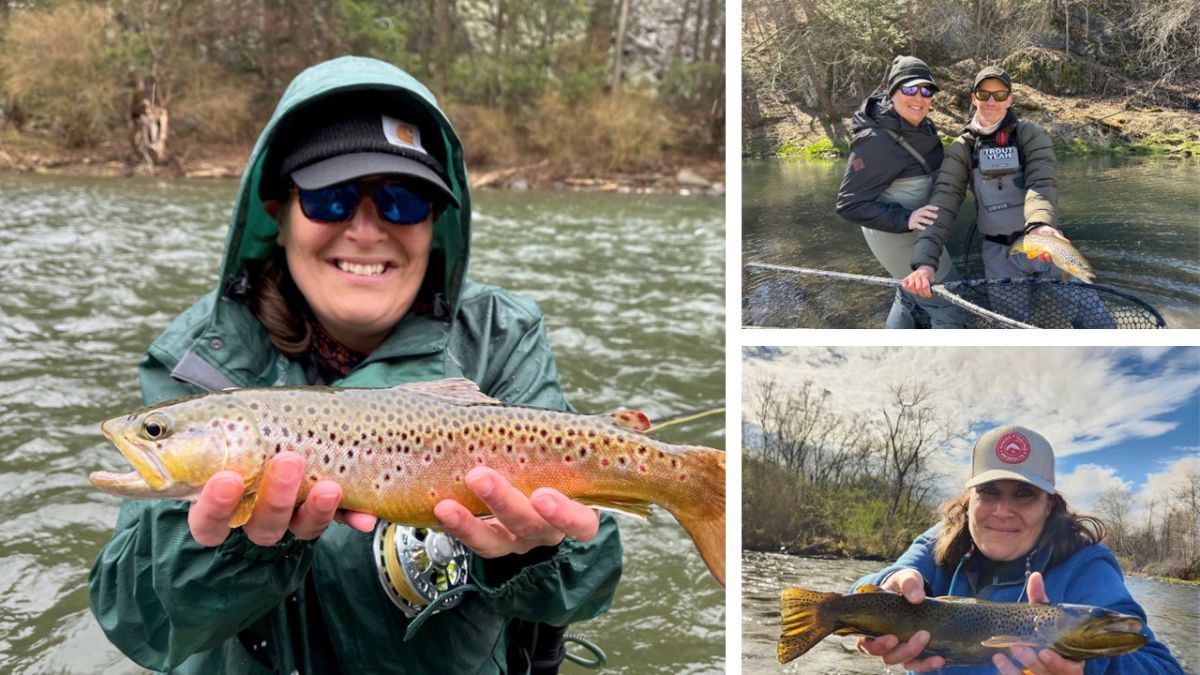
In late 2022, I fished the South Holston in Tennessee. In 40 degree weather that yarn indicator dipped time after time and on the other end of my pole was brown trout after brown trout sprinkled with the occasional rainbow. It was in Tennessee that I fell in love with brownies, having never seen (or caught) so many.
Like many of you, as a 40 year old woman, with a busy work schedule and family commitments, getting a day–two if I’m lucky–on the water a couple times a year is really a treat. After being skunked a few times on solo outings, a few years ago I decided to lean into hiring a guide for at least one day of a long weekend trip–just to get me acquainted with the area, the water, the hatches, teach me a few new things, etc. This step was transformative for me in my fly fishing journey because it made the difference between “catching” or “fishing”. In Tennessee I took a day float trip with a guide and fished the other two days on my own.
After Tennessee, I was hot on the trail for browns. I wanted more. I saw an ad on the women’s fly forums for a two-day women’s fly fishing and euronymphing clinic in Coburn, PA. Priced reasonably, including lodging, meals and fishing/clinic time on the water–I added on a day trip with a guide the day before the clinic, and I was in. This trip was transformative for me and it is the trip I want to share with you in this newsletter.
Arriving…I knew I was somewhere special from the moment I turned off the highway and took the windy mountainous roads into town along Elk Creek, and the Penns through Millheim, PA into Coburn ending up at the Feathered Hook. Arriving at dusk, and not knowing exactly where I was going, I was directed to head into town to join the hosts for dinner and was immediately welcomed into the Feathered Hook family. After dinner I was directed to the lodge, and settled in for an early start the following morning. The next morning I met “Boone”, my guide, at the Feathered Hook and we immediately headed out to the water. It is all very close–short drives, good parking for river access, and within 30 min we were on browns. Boone took the time to share with me a modified euronymphing rig (this one with an indicator), and we progressed over the course of the day to tightlining, which was a perfect precursor to the next two days of euronymphing clinic. It rained nearly all day, I could barely feel my fingers by the end of it, and I have never been so relaxed and at peace… on the water, rod in hand, beautiful trout on the end of the line and into the net.
The clinic itself was hosted by Tess Weigand and Josh Miller. Two familiar names to the fly fishing community as Josh coaches the US Youth Fly Fishing Team, and Tess is on the US Women’s Fly Fishing team. I went into this knowing nothing more about euronymphing than the tightlining I had worked up to the day before. Prior to this trip I was mostly dry flying or fishing with a yarn indicator and a couple of nymphs. Both Tess and Josh were exceptional. Breaking down the basics over breakfast, discussing their experience and backgrounds, getting to know us, and then suiting up to hit the water for the day. We then spent most of the day on the water, learning the basic mechanics of euronymphing, each instructors’ preferred rigs, and we happened to be 1:1 participant and instructor. As such, we each had a chance to spend time with each Josh and Tess, learning tips and techniques that were highly complimentary, but also slightly individualized to each instructor. The coaching was key–in addition to technical skills and reading water, I quickly learned I need to ditch my felt bottoms for spikes on my boots, and I learned the value of low light lenses. I definitely missed way more than I caught, and together as a group, we celebrated the ones landed. Best of all, we learned a new technique, and one that could work in conditions where my others would not.
Uniquely, the Feathered Hook Lodge sits on about a mile of private stream access on Pine Creek. So the second day of the clinic, we took our newly learned skills to Pine Creek with our instructors in the lead. This is Tess’s backyard, and an investment–the Creek and the Lodge–that she and her family have been building up and caring for over the past several years. It was incredible to ride along this beautiful property and hear/see it through an expert’s eyes. To learn about the ecosystem–the birds, trees, and the stream itself. We landed a few big ones back in Pine Creek, and this is where Josh and I took what turned out in hindsight to be our “trout prom” pic. Departing… I knew from the moment I left I would be back.
I view this newsletter as a forum to share our experiences, and I hope you have learned or enjoyed something about mine. I am decent at best in terms of skill, and have not even embarked upon fly tying myself given other life priorities, but it doesn’t keep me from trying something new–something I am certainly not good at to start, or even get a good amount of time to practice and master. There are so many ways to get acquainted with this sport and new water and new species. I as a novice had the chance to fish and learn from some of the best, and they were patient and kind. This is the fly fishing community I enjoy. Tight lines everyone.
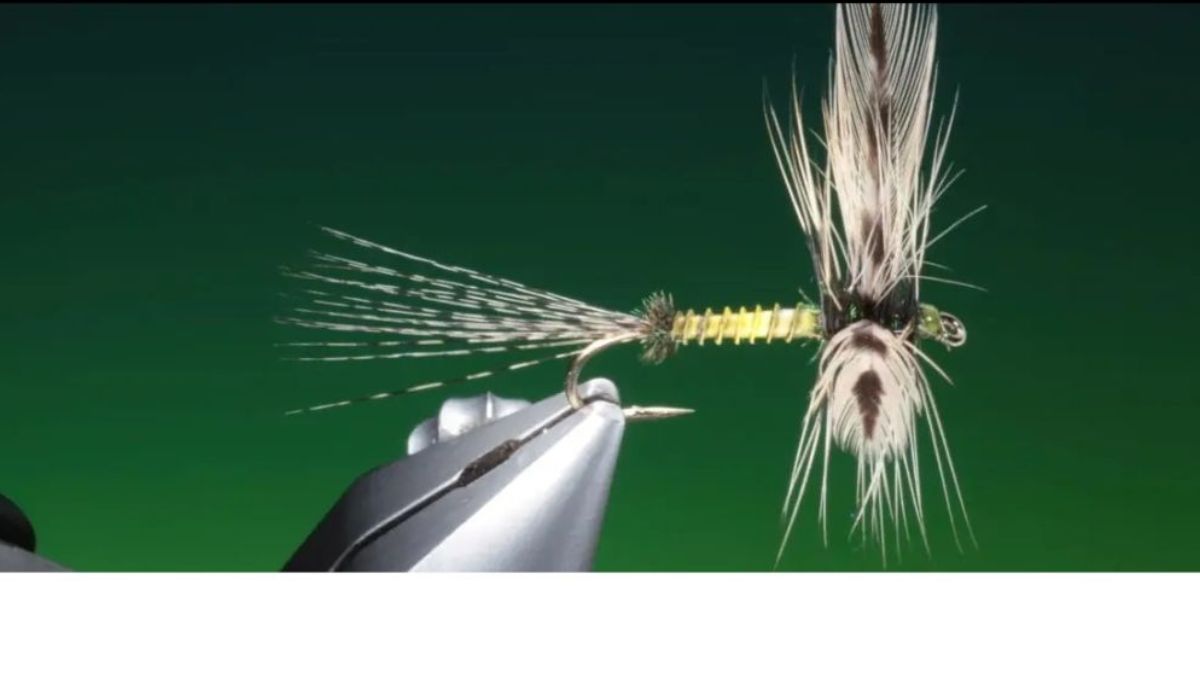
The Green Drake Fly is one of the most effective dry flies for catching trout, especially in the early summer months. The fly is typically fished during the late afternoon and early evening when the Green Drake mayflies start to emerge from the water.
Fly Recipe courtesy of The Feather Bender.
Hook: Mustad R43 # 8
Tying thread: Sheer 14/0 olive
Tail: Coq de Leon
Butt: Peacock herl
Body: Wild turkey biot
Thorax: Peacock herl
Wings: Speckled brown hen
Hackle: Silver badger
Here is the video: https://www.youtube.com/watch?v=bGagy83q8sk&t=4s
YouTube | Posted on February 26, 2020 | Categories Fly Fishing
p.s. If you don’t want to tie the fly, hit up a friend who ties or go to your local fly shop!
Upcoming Events
Latest News
- One Calendar for Our Fly Fishing & Outdoor Community
- Mad River Drift Newsletter - September 2026
- 10/16/26 -International Fly Fishing Film Festival at Nocterra Brewing, Powell
- Mad River Drift Newsletter - June 2026
- Cancelled — Saturday’s Stream Water Quality Monitoring
- Reminder: Mad River TU Annual Meeting – April 18
- Mad River Drift Newsletter - March 2026