President’s Message
Well, the end of summer is approaching. I hope that everyone had many opportunities to wet a line and had some success. There are a lot of fishing, conservation, and Chapter-related things happening now and in the near future so I guess that I’ll just put them all out there for your consideration.
The Ohio Division of Natural Resources – Division of Wildlife is offering Basics of Fly Fishing instruction at the Castalia Hatchery in morning and afternoon sessions on Fridays throughout the month of September. In addition to the instruction, there will be an opportunity to fly fish for trout on Cold Creek. Registration is already open and the number of attendees for each session is limited. For more information and/or to register, see this link https://apps.ohiodnr.gov/wildlife/educationregistration
On June 10, the Little Miami Watershed Network celebrated the 50th anniversary of the Little Miami River being designated as an Ohio State Wild and Scenic River. On August 30, there was a 50th Anniversary celebration of the Olentangy River being designated as an Ohio State Scenic River; the Olentangy is one of nine designated as Scenic Rivers in Ohio. There are also three rivers designated as Scenic and Recreational. The Little Miami is one of four rivers designated as Wild and Scenic in the State. Groups have tried to get Mad River designated as a Scenic River a couple times in the past but haven’t been successful . . . yet. We support local efforts to seek an official Scenic River designation for the Mad.
Our last stream water quality monitoring session scheduled for August 26 was cancelled due to very high water (over 1000 cfs at Urbana). It has been rescheduled for September 30. If you’re interested, watch for an announcement for a training session to become a Level 1 stream monitor. Level 1 is the minimum requirement for monitoring with Level 2 being required for our data to be submitted as credible. We have a few Level 2 monitors in the Chapter, but most of our volunteers are at least Level 1. Volunteering for our monitoring events is a great way to learn more about water quality and the food trout eat. The training will be conducted by our friends at the Miami Conservancy District (MCD).
The Chapter will be hosting a screening of the International Fly Fishing Film Festival (IF4) on October 6 at Nocterra Brewing in Powell. This is not the same film screening that Mad River Outfitters last spring, so come on out! It’s going to be a great evening. One of SmithFly‘s ultralight inflatable fishing rafts is featured in one of the films. If you have any questions, please see the article below or contact Pam Allen at pamallen@tumadriver.org
Our highly successful Trout in the Classroom program (TIC) continues to grow. The most recent addition to the program is the Paul Laurence Dunbar High School in Dayton. Once again, we have our friends at MCD to thank as they’ve given a grant to assist the school with their equipment purchase.
The Greater Cincinnati Fly Fishing Show (a.k.a. the B.U.F.F. show) for next year has been scheduled for Saturday, February 3rd. This is always a great event and as usual, the Mad River Chapter will have a booth at the show. Please add it to your calendar. We will issue further information as it becomes available.
After coming into being in 1972 and subsequently strengthened and enforced by various administrations and legislatures, the Clean Water Act has been severely weakened by a May 2023 Supreme Court decision (Sackett v. EPA). As a result of a narrow majority (5-4) of the justices not understanding hydrology, geology or the simple fact that water generally runs downhill, they’ve reduced the impact that federal agencies (in this case, the EPA) can have on controlling the quality of our ground and surface waters by taking many wetlands, intermittent streams and headwaters out of the jurisdiction of the EPA. This decision will be far-reaching in that all Federal agencies will be hamstrung when it comes to regulating any or all industries and business practices. This week, EPA revised its rules to reflect the Supreme Court decision. In my personal opinion, absolutely nothing good is going to be the result of this decision.
Anyway, I hate to end on a sour note, but there was mostly good news here. Enjoy the rest of the summer and get ready to transition into fall…my favorite time of the year.
Tightlines Everybody!
p.s. Articles Always Needed!! Pam could use your help with future newsletters. If you’ve been on a fishing trip, or have something else you’d like to share, like a fly recipe, we’d love to hear about it. Write an article and send pictures to her at pamallen@tumadriver.org; it’s that easy 🙂

TU Mad River Chapter is using the IF4 screening to bring together the fly fishing community in Central Ohio and as a fundraiser for stream restoration work the Chapter is planning for the Mad River. It will be a free event, but there will be raffles and a silent auction to raise funds. Donations will be accepted at the door. Join us in the vendor garden before the film to hear what’s happening in the Central Ohio fly fishing community!
Vendor garden opens at 5:30 pm
Film screening starts at 7:00ish (sundown)
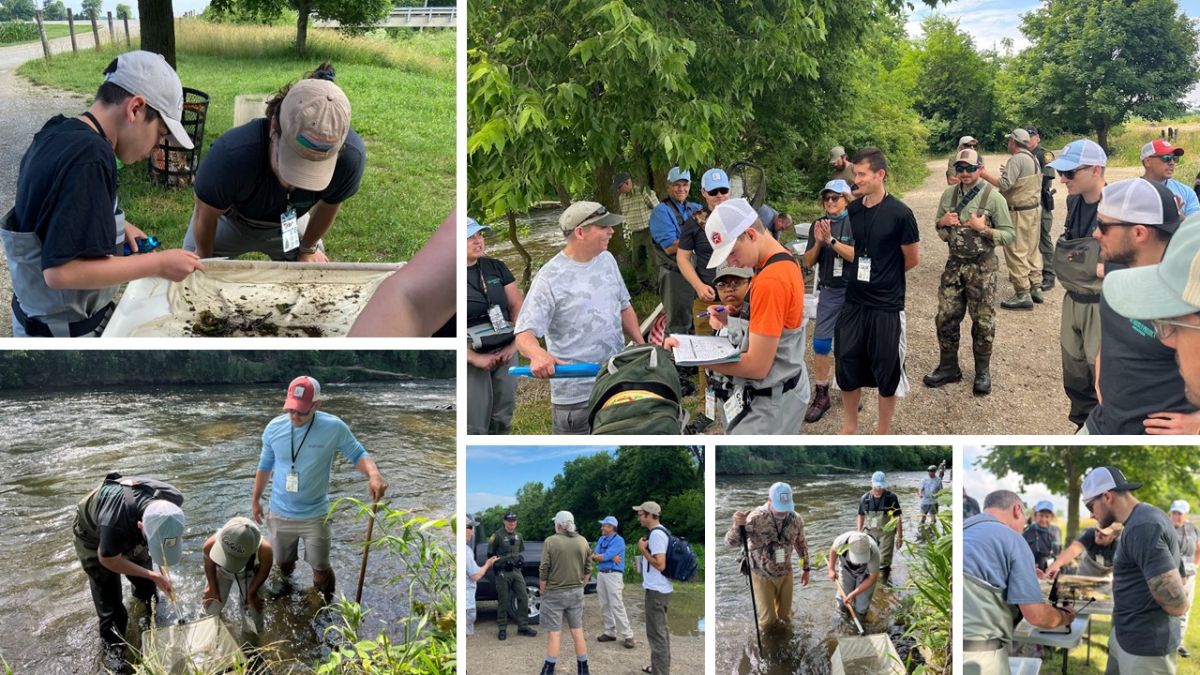
Stream Water Quality Monitoring Results
by Joe Nagel, TU Mad River Chapter
On Saturday, June 24, TU Mad River Chapter members met on the Mad River to conduct our second monitoring session of the season. The Mayfly Project – Columbus joined us at the first two sites.
Here are the Level 1 results from the monitoring session:
US-36 . . . . . . . . . . 35
OH-29 . . . . . . . . . . 38
Watson Property . . 32
Pimtown Rd . . . . . . 24
Mac-o-Chee . . . . . . 25
West Liberty Park . . 26
(On the scale used for the above results, any score above 23 is rated as “Excellent”. The results show the presence of the different types of macro-invertebrates, but they do not (and cannot) convey information about bug diversity or density.)
As is normal for this time of year, the most prevalent bugs found were mayflies and caddis. The river was at a normal summertime flow (~150 cfs at the US 36 gauge, and water temps at all sites ranged between 60 and 63 degrees. One item of note – at US 36, for the first time since I have been participating in these sessions, we found what we believe to be a rat-tailed maggot.
The Credible Data Program classifies surface water monitoring performed by watershed groups, state agencies, schools, local volunteers and other organizations. The Mad River Chapter primarily monitors at Level 1 to give us a general understanding about the health of the river. Recently, we have been monitoring at Level 2 at a few of our regular locations.
Level 2 was designed with watershed groups in mind. Level 2 data can be used to evaluate the effectiveness of pollution controls, to conduct initial screening of water quality conditions, and to promote public awareness and education about surface waters of the state. Level 2 groups are often in the position to perform the valuable function of monitoring long term surface water quality trends in a watershed (where Ohio EPA may not have the resources to frequently revisit a particular area).
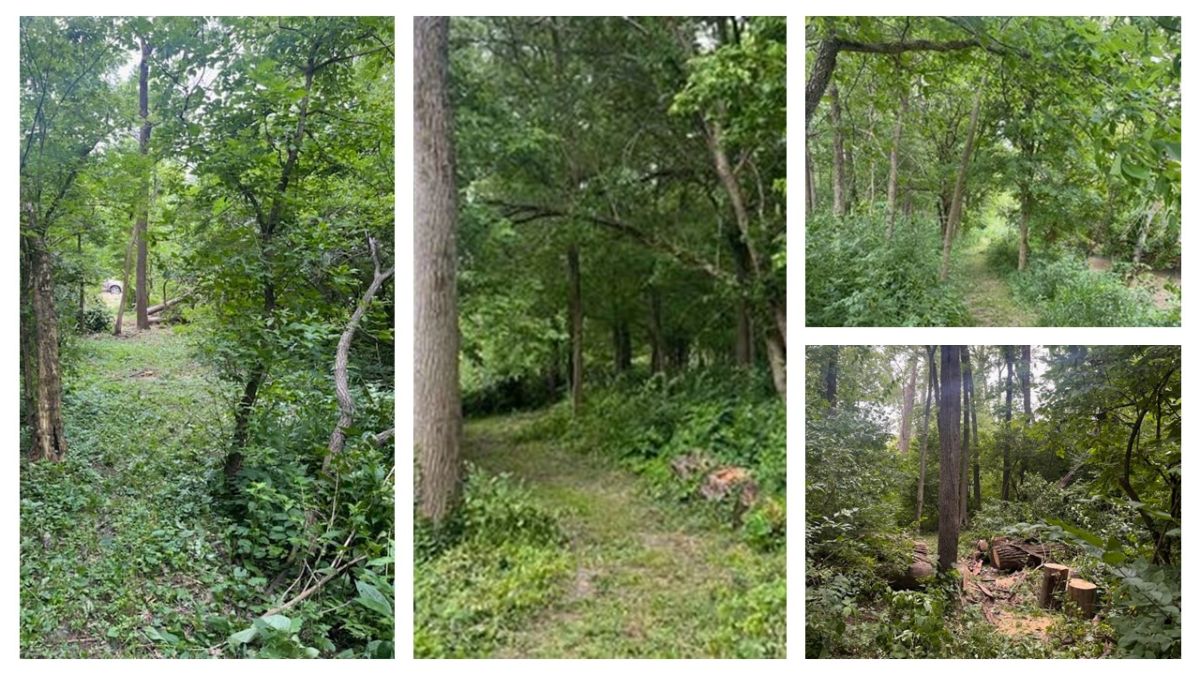
Conservation Work on the Mad Continues
Thanks to Michael Palatas, Lee Souther, Scott Shane, and other volunteers for clearing trails at US-36, the OH-29 & OH-296 access area and Pimtown Rd., along with other work. We are working with landowners, local officials, and organizations to add and improve access, improve riparian areas, stabilize banks, and restore in-stream habitat. We are planning to continue bank stabilization, restore in-stream habitat and remove invasive honeysuckle at Pimtown Rd., this fall. We also have been working with the Village of West Liberty, the Lions Club, and the community to do some bank stabilization and in-stream habitat restoration in the Lions Club Park. We’ve also been assisting the Village in seeking funding to do more extensive work in the future. The Park is a very special area for the community, including for events, like the West Liberty Labor Day Festival. It is also an area where the schools in the Trout in the Classroom (TIC) Program have been releasing their trout and having related student activities.
Finally, we are still planning to have a stream cleanup this fall, but it has not been scheduled. If you are a volunteer as part of the ADOPT-A-BRIDGE/STREAMWATCH Program or just visiting the Mad, please help in picking up litter and keeping the River BEAUTIFUL.
WE ALWAYS NEED VOLUNTEERS! Contact Tom Allen at ptallen111@insight.rr.com. We also will post events to our Facebook page.
For the future of the watershed, sustaining the existing riparian zones and restoring the impacted areas on the mainstem and tributaries is an especially important issue to address. It is going to take a long term, coordinated effort and it begins by working with the landowners; as a part of building collaboration and cooperation, there must be respect and understanding of their needs with a variety of options to encourage them to protect and restore these areas. Also, we will need to have cooperation and collaboration among federal, state, and local agencies, groups and organizations, elected officials, community and local business leaders.
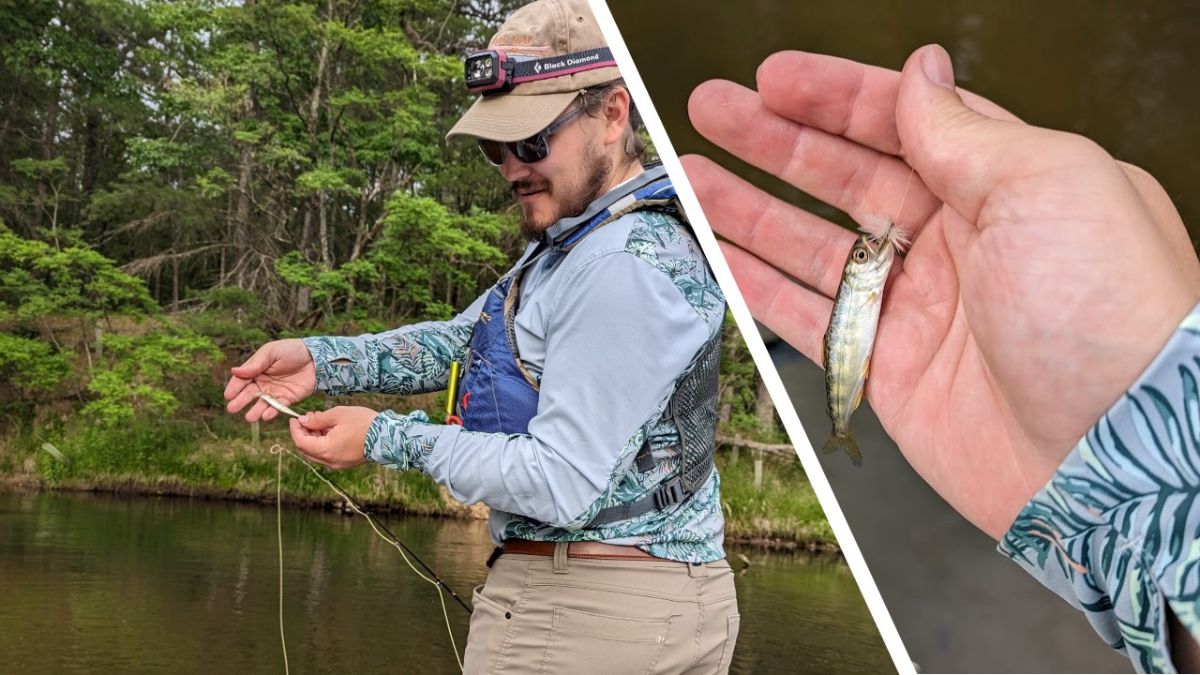
by Tyler Wright, Member, Mad River Chapter
Michigan is home to many of the most famous trout streams and rivers. Many fly fishers look with envy when discussing trips made on these rivers. Stories of big wild fish, caught on dry flies, is something I think all of us chase. This however won’t be one of those stories.
My friend Ryan and I met in college. He was actually the one that introduced and first taught me to fly fish. Back in those days we would get out any chance we got, sometimes multiple times a week. After graduation we both moved away to different cities over 6 hours away, so now our chances to fish together are more on the scale of a handful a year. After banking enough vacation days, Ryan and I decided to take a full week to fish wherever we could agree upon. Unfortunately, for months we were struck with analysis paralysis. As luck would have it, I happened to listen to the episode of April Vokey’s podcast featuring Tommy Lynch. Tommy is a guide in Michigan and widely held as the best mouser around. I knew that was something Ryan had always wanted to learn so we jumped at the chance. We would be spending 2 nights with Tommy on Pere Marquette, out in the dark. From there we decided to head west and finish out the week on the Manistee. Our trip fell in the sweet spot of the end of the drake hatch and the beginning of the golden stone hatch, both of which are supposed to be legendary. Needless to say, we were excited.
Day 1
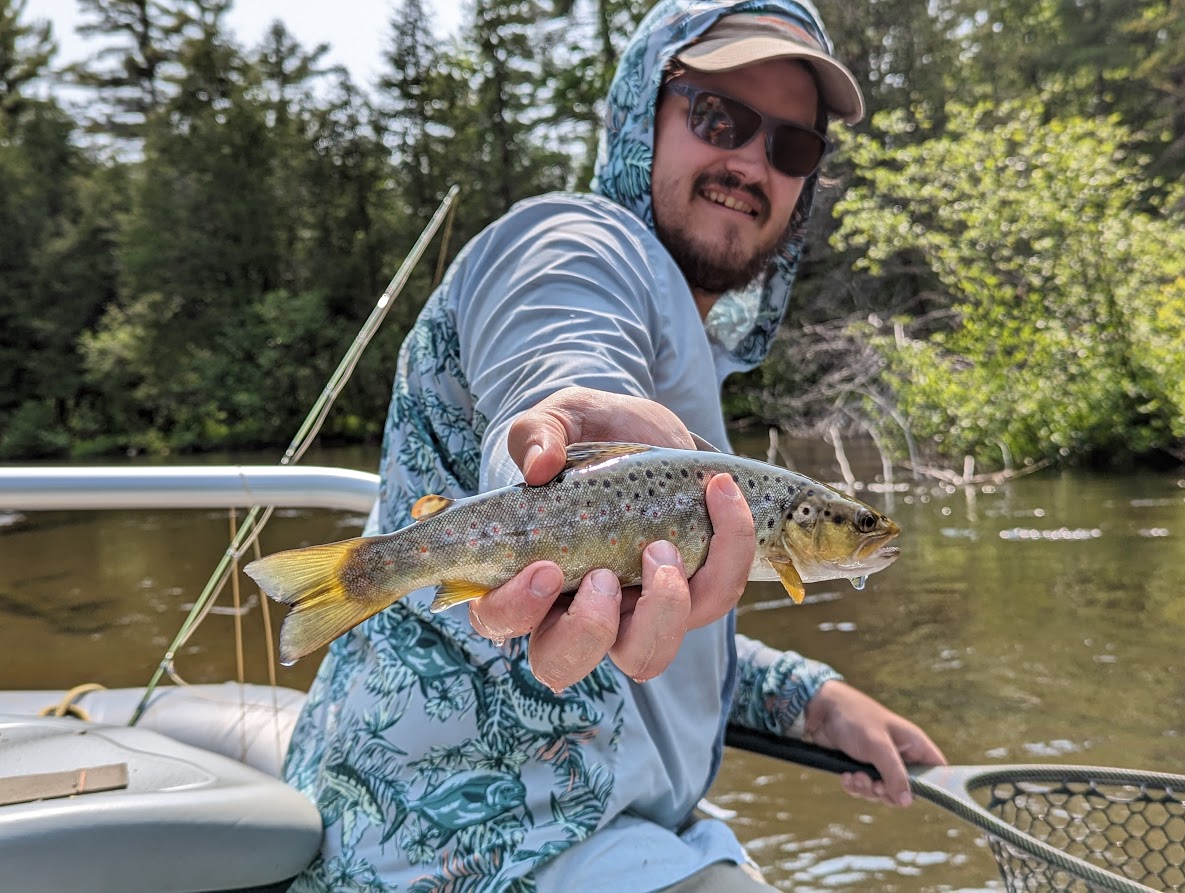
I left home at around 3:30 in the morning, the goal was to make it to Baldwin, Michigan around lunch time. Ryan was able to head up the day before and get camp set up. After a long drive I snacked on a couple bars for lunch, we packed up the raft and headed out for a short float. We lined up a couple hour float to end the day on. The beauty of the PM’s winds and turns is that a multi hour float had less than a 15 minute shuttle. Within 30 minutes we were out on our first float of the trip. Ryan went into town to get the scoop from the fly shop about what flies were working and what hatches we should expect to see. Apparently, we were just in time for the end of the golden stone hatch and according to the shopkeeper, everyone had done really well on foam imitations. We had a much different experience. For 2 hours straight and at least 10 different rigs, we could not move a single fish. Not only did we exhaust the recommendations from the fly shop, we almost went through all of our dry flies in our box. We started to get some takers on a drake pattern we had left over from a previous trip, but nothing big enough to actually eat the fly. Until finally I managed to hook quite possibly the smallest fish of my life. That didn’t matter though, we were on the board. After dropping anchor to laugh and take pictures of my trophy, we continued on down the river. After a couple more hours of hard fishing, we finish our float with a handful of small fish to our name.
We woke on day two to a cold snap in June. Temperatures dropped from averaging in the 80s to highs in the 60s. The cicadas and other bug life we grew accustomed to the previous day were all gone. We brushed this off since at the very least we were going out with a guide that night, so we decided to take it easy and prepare for the night ahead. The trip began around 6 pm that gave us a couple hours of fishing and gave our guide time to fix our casting before night fell.
Casting in the dark is an experience that is hard to explain. Everything looks much closer, so many casts would come up short. After what felt like an hour of Tommy fixing up my cast, it was time to learn to mouse. The idea is similar to swinging flies for steelhead. You cast out over where you want to fish and make the fly “swim” by adding tension to the line and making “stacks” ( basically a special mend to move the fly instead of the line). Once I got the hang of casting and fishing the fly, we started to get some action. Tommy explains the eating habits of brown trout in the dark as they are much more likely to fully commit to an eat, rather than nibble on food, due to the perceived safety of darkness. I experienced this first hand as the sound of a cup being pulled underwater rang out and the line went taught. I managed to land a beautiful mid teens brown, and had officially caught a fish on the mouse. Ryan got his chance and after a couple missed opportunities, landed his first fish as well. I would love to say the excitement kept the blood pumping, but I was so cold that you could hear me shivering on the boat. The temperature dropped into the 50s that night and I was sorely unprepared. But I sucked it up because it was my turn to cast again, and Tommy said there was a resident fish at the next spot that clocks in over 20″. Ten minutes of fishing the spot and we hear a large splash, and I set the hook. This is not what you want to do as I mentioned before the fish will fully commit when eating at night, so I just pulled my fly out of this fish’s feeding window. I get the go ahead to fish it a couple more times and I get lucky and hear a large splash again. Unfortunately, I set the hook again making a large popping noise and blowing the spot. After that we had to move on as we weren’t going to catch anything in that spot for a awhile.The rest of the night dragged on as the temperature continued to drop,and so did the number of fish we were moving. We got off the river at 3:30 and immediately went to bed.
Day 3
After some well needed rest and time to warm up the bones, we slowly got up around 10 am. The weather had decided to take another turn as it was now forecast to rain all day. Foregoing breakfast at the campsite, we went into town, to the only diner, to get some fuel for the rest of the day. Conversation over breakfast was a mixture of laughing at our misfortune of freezing the previous night and getting soaked this morning, as well as going over what we learned. Heading back to camp after breakfast, we decided to get our gear under a tarp and then nap to prepare for the upcoming night. We were both determined to get a trophy that night. The rain let up with just enough time to get our stuff together and head to the spot to meet Tommy. We were fishing a different part of the river that night, and based on Tommy’s recent experiences, there should be quite a few fish moving. The temperature was just as low as the night before, but we were prepared this time for the weather and the fishing. We spent the next six or so hours fishing as hard as we could with no luck. Tommy was surprised we were unable to move any fish and actually complemented our mousing that night. Ryan and I laughed it off and explained we tend to have that effect on rivers. We got off the river with only one fish to the boat. (Tommy called us the next day and let us know he found out someone had been fishing below us the whole night, likely leading to the lack of action.)
Day 4
We had spent our last night on the Pere Marquette and were heading further west to the Manistee. Another river famous for its trout population. After stopping in the fly shop, we planned out our float for that day and the next and headed out. As we were already expecting, the water was extremely low, with minimal bug activity. Even so, in a relatively short float we managed to pick up a few brookies. This was a good sign and left us ready for the full day float we had planned for the next day.
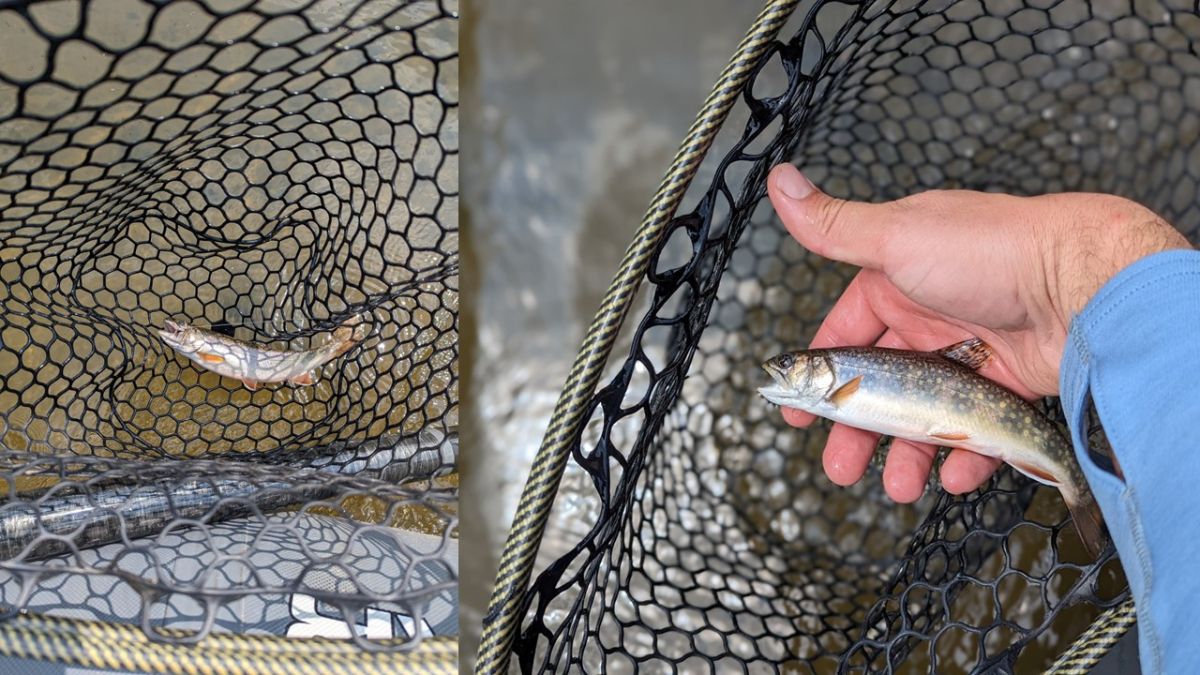
Our final fishing day in Michigan. We decided to do a full-day float on the upper Manistee. I felt like my shoulder would come out of its socket at any moment. Ryan took control of the oars and didn’t even want to pick up a rod because he was hurting so badly. Well, we just couldn’t give up on our last day. I bit the bullet and fished first. We made a deal we would switch after every fish. That was a mistake. I fished for the first three hours of the float without landing a single fish. We would get some nibbles on the fly only for the action to completely die moments later. We finally gave my shoulder a break and Ryan fished for the next hour with the same results. We were both frustrated and worn out from the week we had. We had another two hours of float left and I agreed to fish the last bit. We were less than a mile from the take-out when I casted to a sunken log, which under normal conditions would hold fish. I finally connected. You have never heard two people more excited about a ten-inch fish, but that was the fish we were chasing all day. It was the validation that we were looking for all day. We were able to leave the river feeling accomplished that we managed to pull a beautiful wild brown trout under some tough circumstances.
Our trip had come to an end. Was it the trip we had in mind? Absolutely not. Was it a relaxing trip? Also no. They were five of the hardest, least successful days of fishing I have had since starting this sport. Would I trade that week for anything? Not a chance. It is exceedingly rare that I get a chance to spend a week doing nothing but spending time with a great friend out on the river. I guess that is what makes all of the hard times on (and off) the water worth it. Spending time with people that are important to you is never wrong, even when nothing is going right.
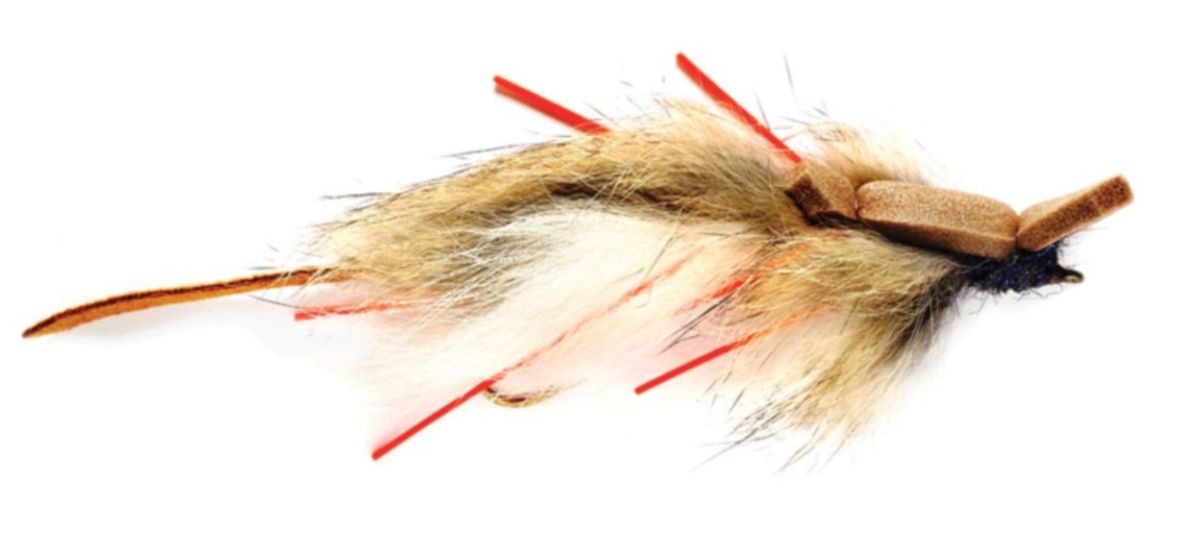
When it comes to fishing the dark side. . .
Tommy Lynch’s White Belly Mouse is the fly to have. A very effective and easy to tie pattern that creates a great wake and profile on the water.
Material List
Thread: Veevus GSP – Black – 100 Denier
Rear Hook: Daiichi 2441 Salmon Hook #1/0
Tail: Rubber Bands
Body: Hareline Rabbit Strips, Sand Variant, White
Legs: Hareline Medium Round Rubber Legs, Orange
Connection: Berkley FireLine, 30 lb.
Front Hook: Gamakatsu 230409 #2
Head: Hareline 1/8” Evazote Foam, Black or Tan
Fly Recipe courtesy of Schultz Outfitters, Tommy Lynch’s White Belly Mouse
YouTube | Posted on August 16, 2017 | Categories Fly Fishing
p.s. If you don’t want to tie the fly, hit up a friend who ties or go to your local fly shop!
Upcoming events:
Water Quality Monitoring: September 30, 2023, 9:00am – 12:00 pm
Meet at the US 36 Bridge
International Fly Fishing Film Festival (IF4) – October 6, 2023, 5:30-10:00pm
Film starts at 7:00iss (sundown)
Nocterra Brewing, Powell. OH
Upcoming Events
Latest News
- One Calendar for Our Fly Fishing & Outdoor Community
- Mad River Drift Newsletter - September 2026
- 10/16/26 -International Fly Fishing Film Festival at Nocterra Brewing, Powell
- Mad River Drift Newsletter - June 2026
- Cancelled — Saturday’s Stream Water Quality Monitoring
- Reminder: Mad River TU Annual Meeting – April 18
- Mad River Drift Newsletter - March 2026